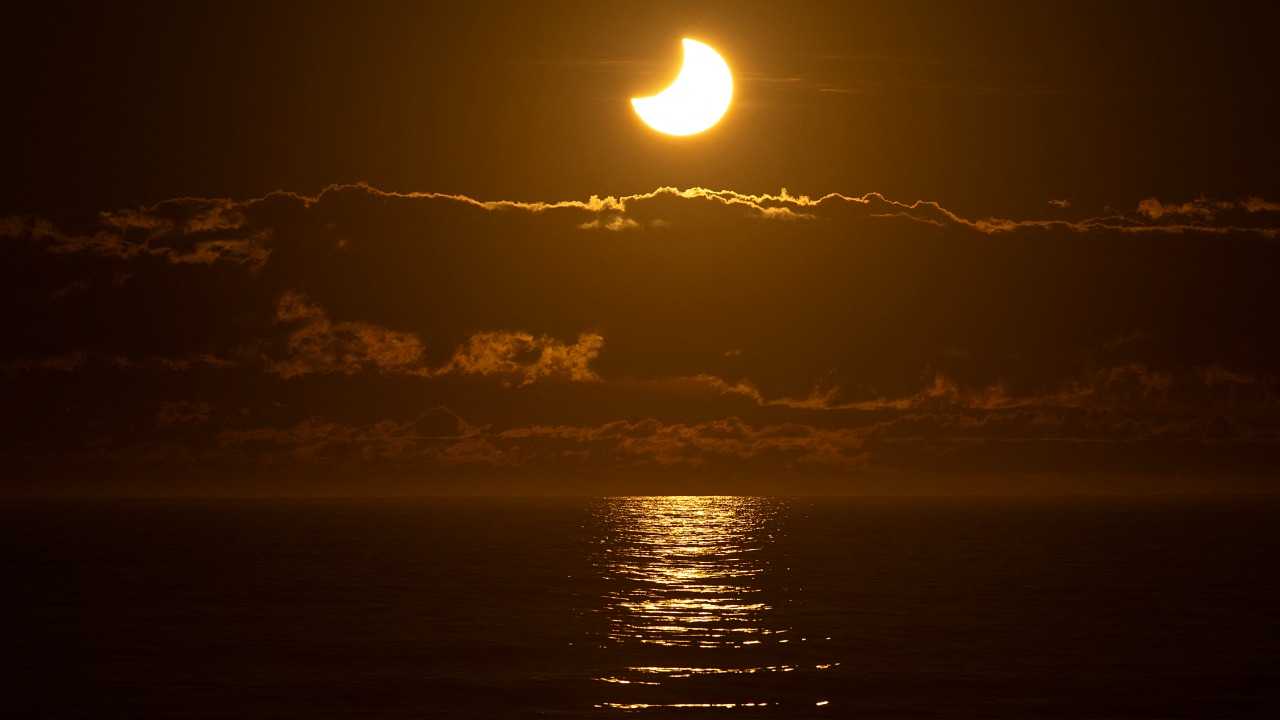
Longest Solar Eclipse in a Century to Cross Three Continents
Skywatchers across parts of Europe, Africa, and the Middle East are set to experience a rare astronomical spectacle on August 2, 2027, when a total solar eclipse—the longest expected in 100 years—will briefly turn day into near-night. According to NASA, the event will be visible along a narrow path stretching from southern Spain and Morocco, across North Africa, and into the Middle East.
At its maximum, the eclipse will reach an extraordinary totality of around 6 minutes and 23 seconds. Scientists describe this duration as exceptional in modern times. The point of greatest eclipse will occur in southern Egypt, close to the historic Nile cities of Luxor and Aswan. There, observers will see the sun completely obscured, with only the glowing corona visible around the moon’s dark outline, casting an eerie twilight over ancient temples and the surrounding desert.
NASA says the moon’s shadow will first touch Earth over the Atlantic Ocean before making landfall in southern Spain and Morocco. It will then sweep eastward across Algeria, Tunisia, Libya, and Egypt, continuing over parts of Saudi Arabia and Yemen, and finally reaching the Somali coast. Regions just outside this narrow track will still notice a partial eclipse, though without the dramatic darkness of full totality.
Astronomers explain that the unusually long duration is due to a favorable cosmic alignment. At the time of the eclipse, the moon will be relatively close to Earth, making it appear slightly larger in the sky, while Earth will be farther from the sun, causing the sun to appear marginally smaller. This precise geometry allows the moon to fully cover the sun for an extended period.
For comparison, the widely watched April 2024 eclipse over North America lasted about 4 minutes and 28 seconds, while a total eclipse expected over parts of Spain in August 2026 will last less than two minutes. The last eclipse to exceed six minutes occurred on July 11, 1991, when totality reached approximately 6 minutes and 52 seconds, according to The Greek Repoter.
Scientists note that the absolute theoretical maximum for a total solar eclipse is about 7 minutes and 32 seconds, constrained by the distances and motions of Earth, the moon, and the sun. While other long eclipses are predicted later this century, none are expected to surpass the 1991 record.
Officials stress safe viewing practices, warning that observers should never look directly at the sun without certified solar filters, except during the brief phase of totality. Those within the eclipse path can also expect sudden temperature drops, unusual lighting, and noticeable changes in animal behavior as the moon’s shadow races overhead.