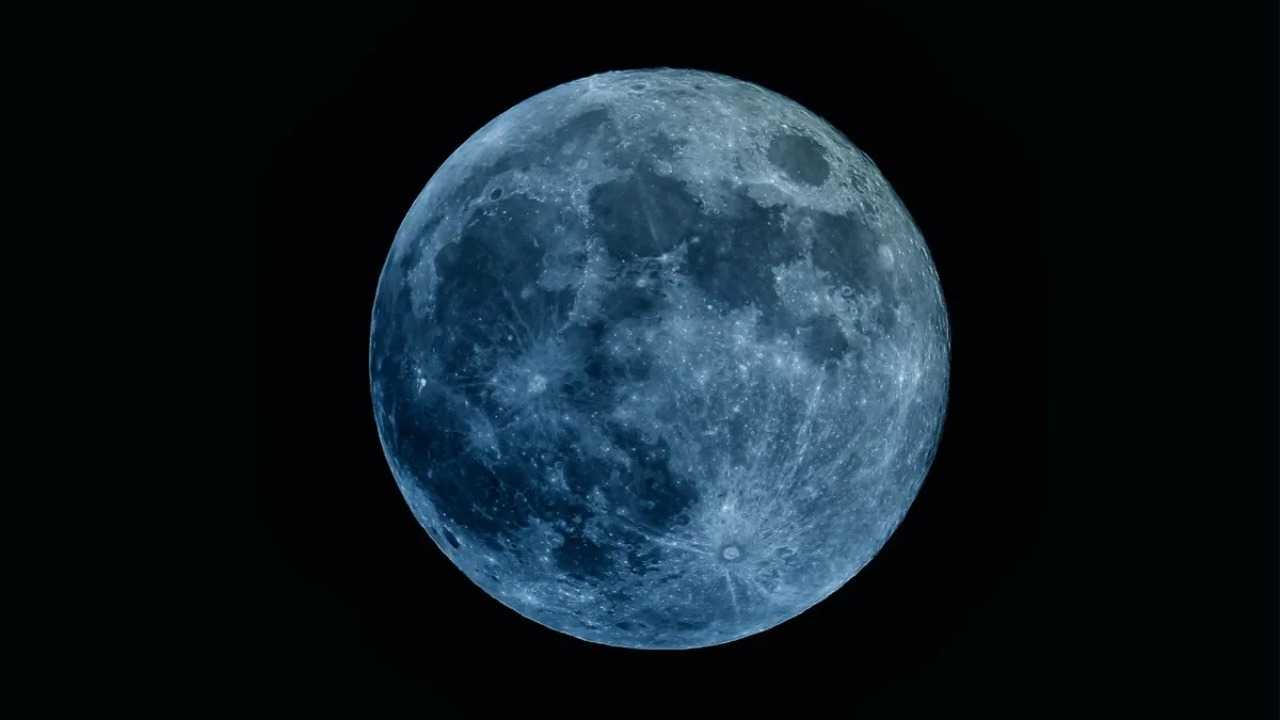
New lunar phenomenon on the horizon: Rare blue supermoon set to illuminate the night sky
This week, stargazers will have the opportunity to witness a rare celestial event - a blue supermoon. On Monday night into Tuesday morning, the full moon will appear roughly one-seventh larger and brighter than usual.
What is a supermoon/blue moon?
The moon's orbit around the Earth is not a perfect circle, but rather an ellipse. This means there is a specific point in the moon's orbit where it is closest to the Earth, as well as a point where it is farthest away.
On average, the moon maintains a distance of about 384,000 km from the Earth. However, on Monday night, the moon will be significantly closer, coming within 23,000 km of our planet - which is nearly double the diameter of the Earth.
When the moon passes through this closest point in its orbit while also being in a full or new moon phase, it appears much larger and brighter in the sky, leading to the occurrence of a supermoon.
While a "blue moon" refers to there being two full moons within a single calendar month or four full moons within a season, this does not actually mean the moon will appear blue in color.
In fact, the moon will likely appear more reddish or yellowish, especially at dusk, due to the way sunlight refracts through the Earth's atmosphere at the horizon.
When and where can you see the blue supermoon?According to The Guardian, the supermoon will appear full for a 3-day period, from Sunday morning through early Wednesday morning, according to NASA. The moon will reach its closest point to Earth at 4:26 AM AEST on Tuesday (2:26 PM EDT on Monday). However, the best viewing opportunity for Australian stargazers will be on Monday evening. The moon is expected to rise around 5 PM and become fully visible over the horizon from around 6 PM across Australia's major cities.
“At dusk, it should actually look largest because of the way that light is reflected by the atmosphere,” said Macquarie University astronomer Prof Richard de Grijs.
“If people want to see a larger than usual moon, look today at dusk towards the horizon.”


