Unveiling the Musical Dimensions of Zimbabwean Rock Art: Instruments, Rituals, and Cultural Identity
Southern Africa has a rich history of rock art research, but studies exploring its link with music remain limited, especially in Zimbabwe. According to Dr. Kumbani, “Musical instruments in rock art or archaeological excavations have not been a priority. However, rock art provides a valuable resource for reconstructing past musical practices.” Most prior Zimbabwean studies focused on themes or regional variations in rock art.
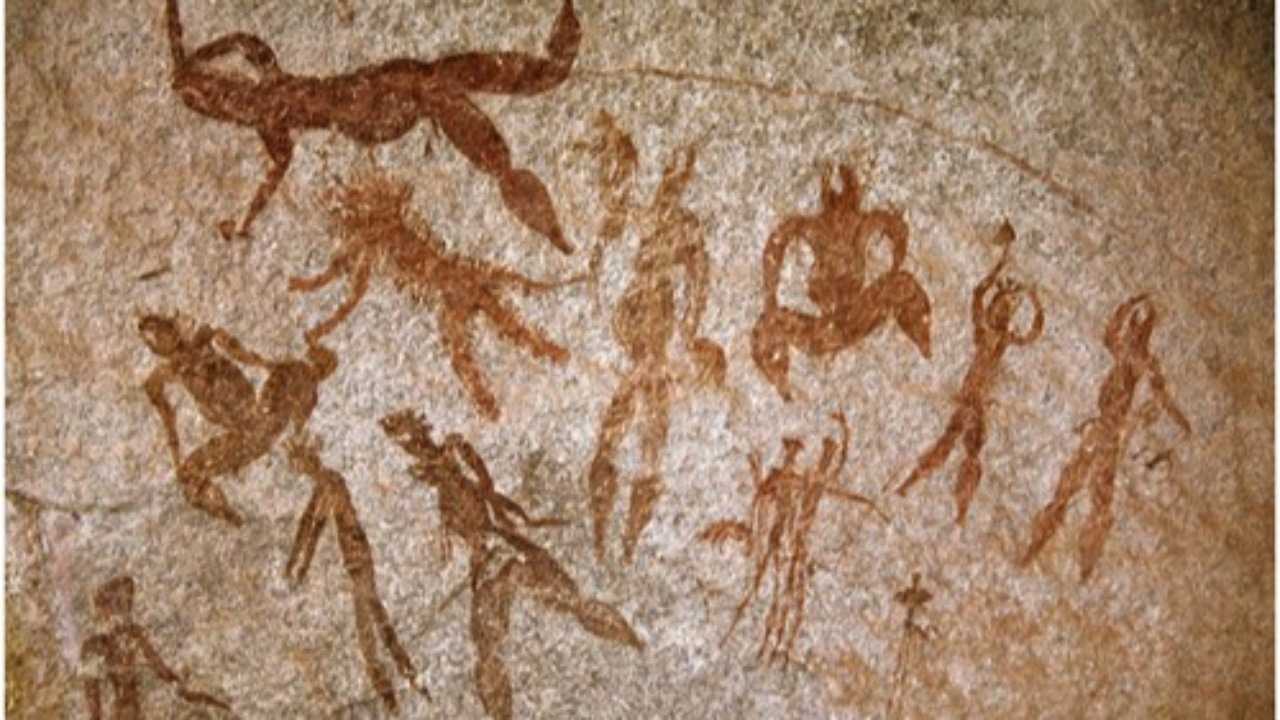
Recent research, led by Dr. Kumbani and Prof. Díaz-Andreu, expands on Prof. Sarah Wurz’s South African work, documenting musical instruments in Zimbabwean rock art. Found mainly in the country’s eastern half, Zimbabwe’s rock art includes finely painted San hunter-gatherer art and finger-painted farmer art, with this study concentrating on the former.
According to Phys Org, the researchers identified instruments categorized into four types under the Hornbostel-Sachs system: idiophones, membranophones, chordophones, and aerophones. To confirm these objects as instruments, the postures of figures were analyzed. For instance, flute players are depicted holding a pipe near their mouth, while rattle players are shown with flexed hands, suggesting movement. Instruments identified included rattles, a drum, trumpets, flutes, and a bullroarer, mostly concentrated in Harare Province, Mashonaland East, and the Matobo Cultural Landscape.
Notably, regional differences emerged. While Zimbabwean rock art shows hand-held rattles, leg rattles—common in South African art and Zimbabwean traditional dances—are absent. Similarly, musical bows, depicted elsewhere in southern Africa, do not appear in Zimbabwean art. Dr. Kumbani attributes these differences to cultural preferences among the groups creating the art.
Many instruments were linked to trance motifs, indicating ritualistic uses. San shamans often performed trance dances for healing and other purposes, and these were depicted through motifs like therianthropes, elongated bodies, or distended stomachs. Rattles and drums were frequently associated with such motifs, suggesting ceremonial roles, while trumpets and flutes were more ambiguously connected, possibly used for entertainment.
Gender dynamics also stood out. Both men and women were depicted using rattles, though trumpets and flutes were exclusively male-associated. Dr. Kumbani suggests this pattern might reflect cultural norms, with aerophones tied to male activities like hunting or rituals. The study provides a foundation for further exploration of music, trance, and cultural identity in San rock art.