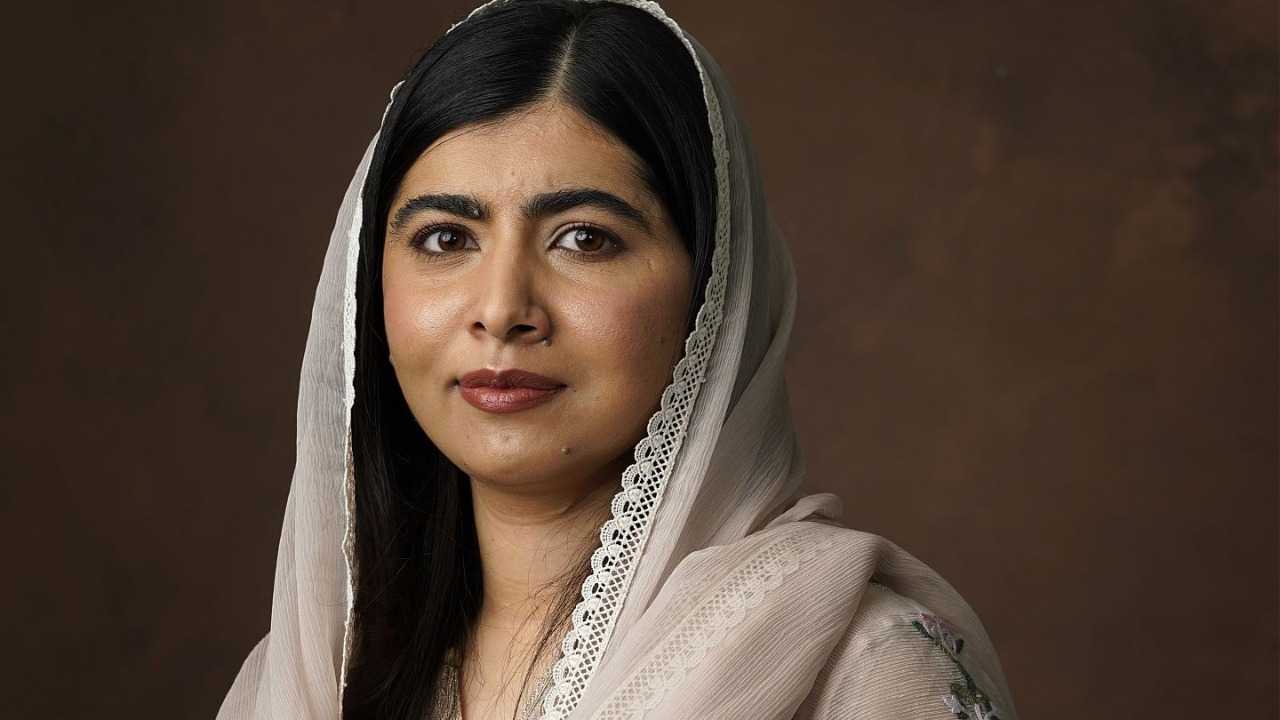
Malala Yousafzai Highlights Afghan Women’s Struggle Under Taliban Rule in 'Bread & Roses'
The bullet that once threatened to silence Malala Yousafzai now fuels her advocacy for Afghan women. Since the Taliban regained control of Afghanistan, women's rights have drastically diminished, with even singing now prohibited.
Malala, who has personal experience with the Taliban's violence—having been shot by a gunman while riding a school bus in Pakistan—expresses her shock at the rapid decline of rights in Afghanistan. "I never thought women’s rights could be so easily undermined," she shared with the BBC Asian Network. "Many girls find themselves in a despairing situation with no clear path forward," says the 27-year-old Nobel laureate. "Their future appears bleak."
The Taliban's return to power in 2021 marked a significant regression for women, just two decades after a US-led invasion had ousted them. In the past few years, restrictive "morality laws" have stripped Afghan women of numerous rights. New dress codes require full-body coverings, and women can no longer travel without a male guardian or make eye contact with unrelated men.
According to BBC News, Malala notes, "These restrictions are so extreme that they defy logic." The United Nations has described the situation as "gender apartheid," a system of discrimination against women that human rights organizations like Amnesty International are pushing to classify as an international crime.
Despite their claims of societal acceptance, the Taliban's policies have devastated women's lives. "They understand that to strip away women's rights, you must start with education," Malala asserts. The UN reports that over a million girls are currently out of school in Afghanistan, approximately 80%, and in 2022, around 100,000 female students were barred from university studies. This lack of education correlates with increased rates of child marriage and maternal health crises.
"Afghan women are enduring incredibly dark times," Malala reflects, "but they continue to resist." As the youngest-ever Nobel Peace Prize recipient, she is also an executive producer of an upcoming documentary titled 'Bread & Roses', which highlights the experiences of three Afghan women living under Taliban rule.
The film follows Zahra, a dentist forced to abandon her profession; activist Taranom, who escapes to the border; and Sharifa, a former government employee who loses her job and autonomy. Malala emphasizes that the film represents not just these three women but the 20 million Afghan girls and women whose stories often go unheard.
Directed by Afghan filmmaker Sahra Mani, with actress Jennifer Lawrence as a producer, 'Bread & Roses' aims to shed light on the plight of women under Taliban rule. Sahra, who fled Afghanistan after the collapse of the US-backed government, has remained in contact with women there, collecting videos and documenting their struggles. "It was crucial to showcase young, educated women eager to contribute to society," she explains. "Now, they are forced to remain inactive at home."
Though the film hasn't yet premiered, Sahra believes the situation has worsened to the point where filming now would be impossible. "At that time, women could still protest," she recalls. "Now, they can't even sing... conditions are deteriorating."
The documentary includes footage of women protesting, capturing their courage even as they face arrest. Sahra emphasizes the importance of prioritizing their safety, stating, "When they were out demanding their rights, it was not for us; it was for their own freedom."
Malala acknowledges that for Afghan women, "defiance is incredibly hard." Yet, she admires their bravery as they risk everything for a better future. All three women featured in the film have since left Afghanistan, and both Malala and Sahra hope the documentary will raise awareness of the ongoing struggles for those who remain.
"They are doing everything they can to advocate for their rights, putting their lives on the line," Malala says. "It’s time for us to support them." She also hopes the film will encourage greater international pressure on the Taliban to restore women's rights.
Reflecting on her shock at the Taliban's resurgence, Malala urges a reevaluation of the systems in place to protect women not only in Afghanistan but globally. While 'Bread & Roses' addresses themes of loss and oppression, it also celebrates resilience and hope. "We can learn so much from the bravery of these Afghan women," she remarks. "If they can stand up to the Taliban without fear, we must stand in solidarity with them."
The film's title is inspired by an Afghan saying: "Bread symbolizes freedom, earning a living, and supporting family." Sahra explains, "In my culture, the one who gives you bread holds power over you. Finding your bread means you are in control of your life."
This is the vision Sahra has for Afghan women, and she believes they will ultimately achieve it. "Women in Afghanistan continually adapt their strategies," she observes. "They are always seeking new ways to resist."
'Bread & Roses' will be available for global streaming on Apple TV+ starting November 22.