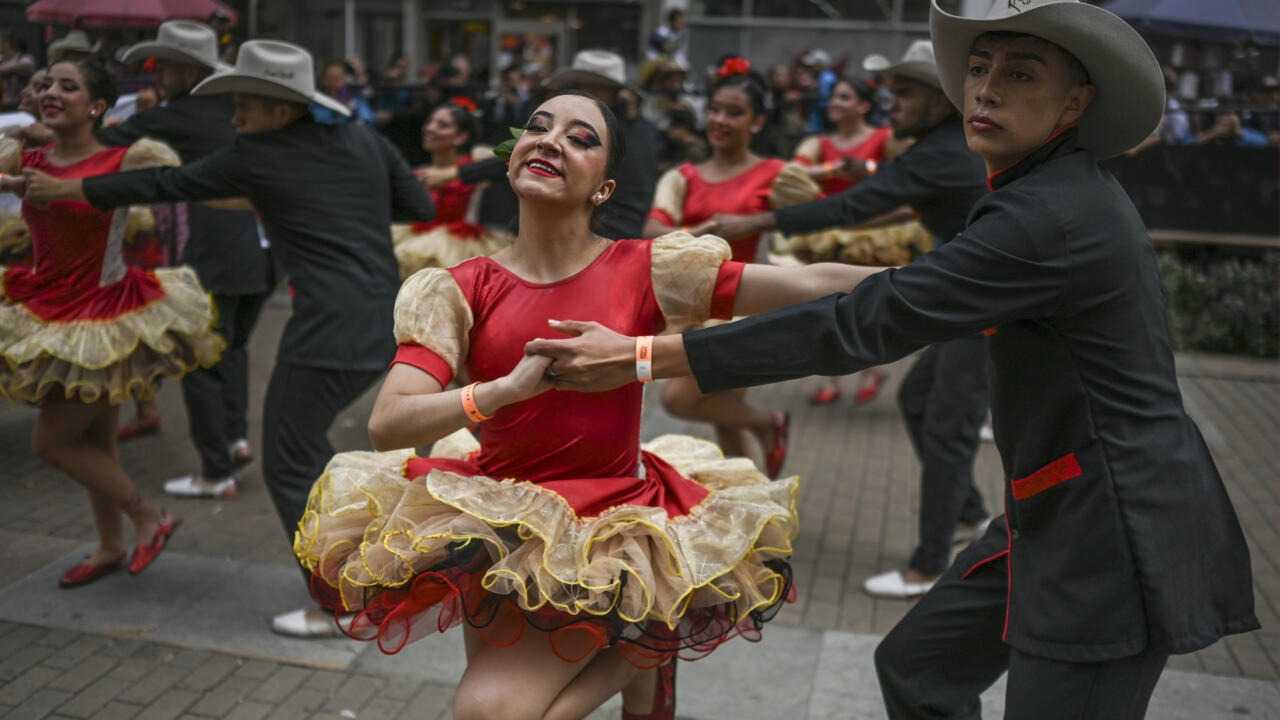
Venezuela's 'joropo' dance declared a UNESCO treasure
Venezuela’s traditional music and dance genre, the joropo, was officially recognized Tuesday as an intangible cultural heritage by UNESCO. Known for its lively rhythm and vibrant performances, the joropo blends music, singing, and fast-paced partner dancing, reflecting the country’s rich cultural tapestry. Originating in the plains along the border between Venezuela and Colombia, the genre has roots in Indigenous, African, and European traditions, making it a unique symbol of the nation’s diverse heritage.
The joropo is typically performed with a combination of instruments, including the harp, violin, and maracas. During performances, female dancers swirl in brightly colored dresses while male partners stomp their feet in rapid, syncopated sequences that match the music’s lively beat. Men traditionally wear suits paired with wide-brimmed hats, creating a striking visual contrast with the women’s flowing attire. The energetic movements and colorful costumes make the joropo both a visual and auditory celebration of Venezuelan culture.
The UNESCO designation was announced during a meeting in New Delhi, where the international cultural organization is reviewing dozens of candidates for recognition as world intangible cultural assets. The recognition has been widely celebrated in Venezuela, providing a moment of pride amid ongoing political and military tensions.
The announcement comes at a particularly tense time for the country, as Venezuela faces a military standoff with the United States. American warships are stationed off the Venezuelan coast and have conducted operations targeting vessels Washington claims are smuggling drugs from Venezuela. President Nicolás Maduro, however, has insisted that the real objective of the U.S. operation is to remove him and his leftist government from power, raising fears of a potential military escalation.
Despite the tense climate, Venezuelans have welcomed the recognition of the joropo as a source of national pride. “We deserve this happiness, given the madness we are living,” said Cesar Marcano, a resident of Caracas. “I am happy that our culture is being recognized, and I hope the Venezuelan people give it the importance that it deserves.”
The joropo was previously declared a national cultural asset in 2014, further solidifying its status as an emblem of Venezuelan identity. UNESCO’s recognition now elevates it to the global stage, highlighting the artistic, historical, and cultural significance of this traditional music and dance form. For many Venezuelans, the honor is a reminder of the country’s enduring cultural richness, even in the midst of political and social challenges.