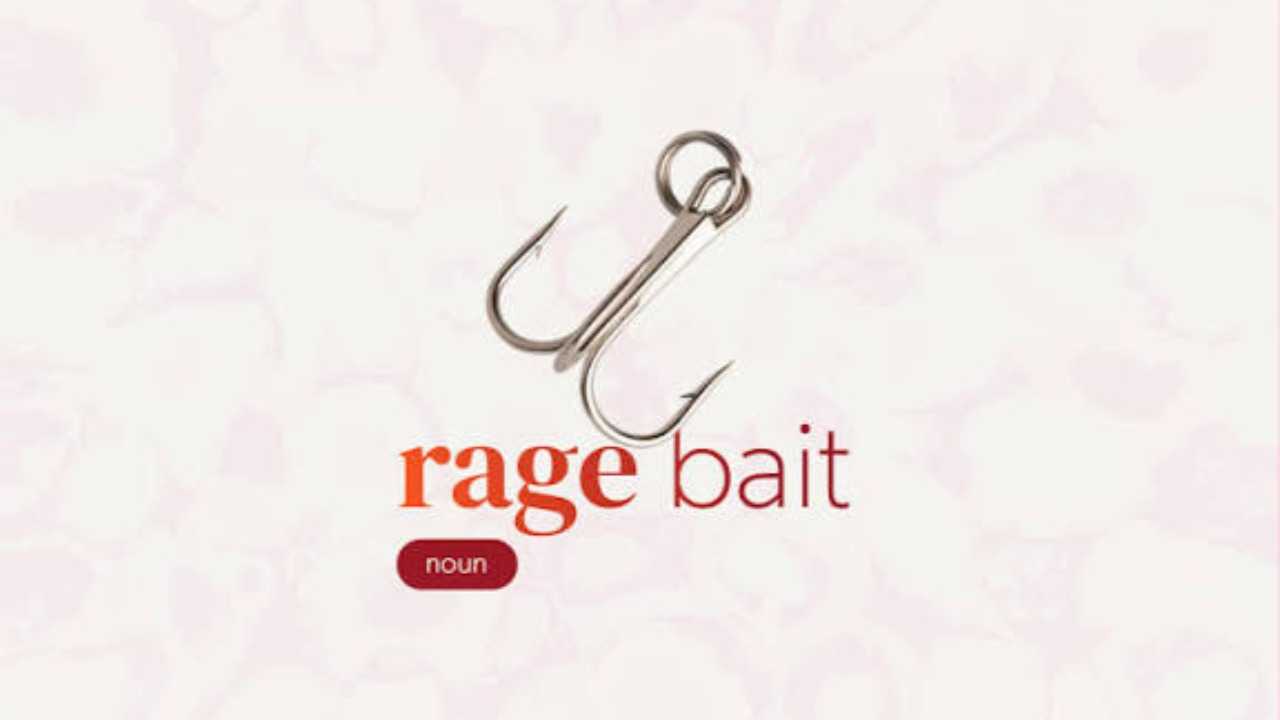
A reflection on social media manipulation: "Rage Bait" named Oxford's word of the year
Do you find yourself getting increasingly irate while scrolling through your social media feed?
If so, you may be falling victim to rage bait, which Oxford University Press has named its word or phrase of the year.
It is a term that describes manipulative tactics used to drive engagement online, with usage of it increasing threefold in the last 12 months, according to the dictionary publisher.
Rage bait beat two other shortlisted terms - aura farming and biohack - to win the title.
The list of words is intended to reflect some of the moods and conversations that have shaped 2025.
What is rage bait?
Even if you don't know the term, if you're a social media user, it's quite likely you have been rage baited.
According to Oxford University Press, which publishes the Oxford English Dictionary, it is defined as online content deliberately designed to elicit anger or outrage by being frustrating, provocative, or offensive.
Such content is typically posted in order to increase traffic to websites or social media accounts.
It is similar to its internet cousin clickbait, where a headline is used to lure a reader in to view an article or video.
But rage bait content has a more specific focus on making people cross.
What do the other shortlisted words mean?
Aura farming: The cultivation of an impressive, attractive, or charismatic persona or public image by behaving or presenting oneself in a way intended subtly to convey an air of confidence, coolness, or mystique.
Biohack: To attempt to improve or optimise one's physical or mental performance, health, longevity, or wellbeing by altering one's diet, exercise routine, or lifestyle, or by using other means such as drugs, supplements, or technological devices.
The three shortlisted words were put to a public vote, the results of which helped to guide the final decision taken by OUP's language experts.
"The fact that the word rage bait exists and has seen such a dramatic surge in usage means we're increasingly aware of the manipulation tactics we can be drawn into online," said Casper Grathwohl, president of Oxford Languages.
"Before, the internet was focused on grabbing our attention by sparking curiosity in exchange for clicks, but now we've seen a dramatic shift to it hijacking and influencing our emotions, and how we respond.
"It feels like the natural progression in an ongoing conversation about what it means to be human in a tech-driven world - and the extremes of online culture."