Space-based solar power: A viable future for clean energy?
Harvesting solar energy in orbit and beaming it down to Earth has long been a concept straddling the line between science fiction and reality. Recently, a number of companies have emerged, claiming they can finally make this idea feasible.
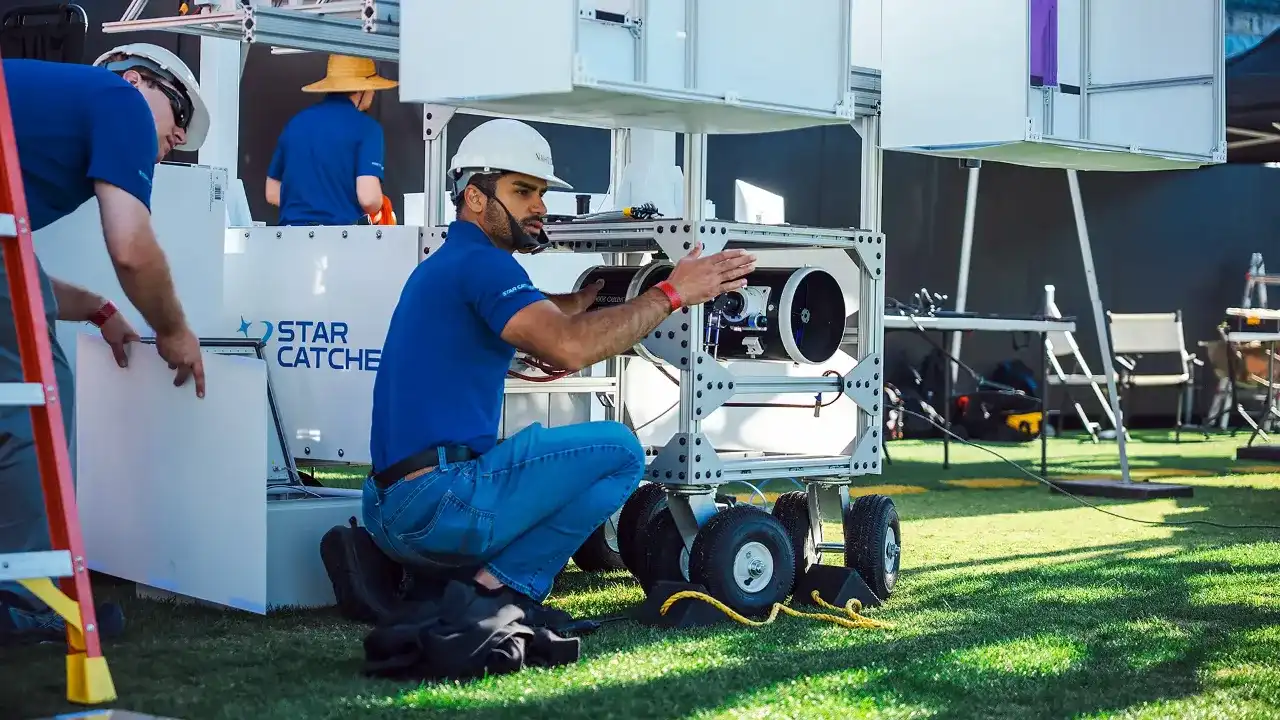
In March, an intriguing test took place in a Florida football stadium, where beams of light were shot across the field. This demonstration involved collecting sunlight and transmitting it using large lenses, akin to a magnifying glass. Andrew Rush, CEO of Star Catcher, described the experiment where they successfully beamed 100 watts over a distance of 105 meters (345 feet). The aim was to evaluate the potential of transmitting sunlight to power satellites.
The concept of space-based solar power seeks to harness sunlight in space and deliver it to Earth or other satellites, circumventing limitations faced by traditional solar panels on the ground—namely, atmospheric interference, weather conditions, and the day-night cycle. In space, solar panels can collect sunlight almost continuously at higher efficiencies due to the absence of atmospheric filtering.
David Homfray, co-founder of UK-based Space Solar, noted the increasing interest from various countries, including the UK, US, Japan, and China, in this technology. He believes that space-based solar power could significantly contribute to Europe’s renewable energy needs, potentially supplying up to 80% of its requirements. This is largely due to the higher power density—over 10 times greater than that of terrestrial solar—allowing for more efficient conversion of solar energy into electricity.
However, the realization of this concept presents substantial challenges. Creating vast satellite constellations could be controversial, operationally complex, and require numerous rocket launches. Moreover, conventional renewable energy sources may be quicker and more cost-effective to implement as the world strives to replace fossil fuels.
Despite these hurdles, the potential benefits of space-based solar power are compelling.