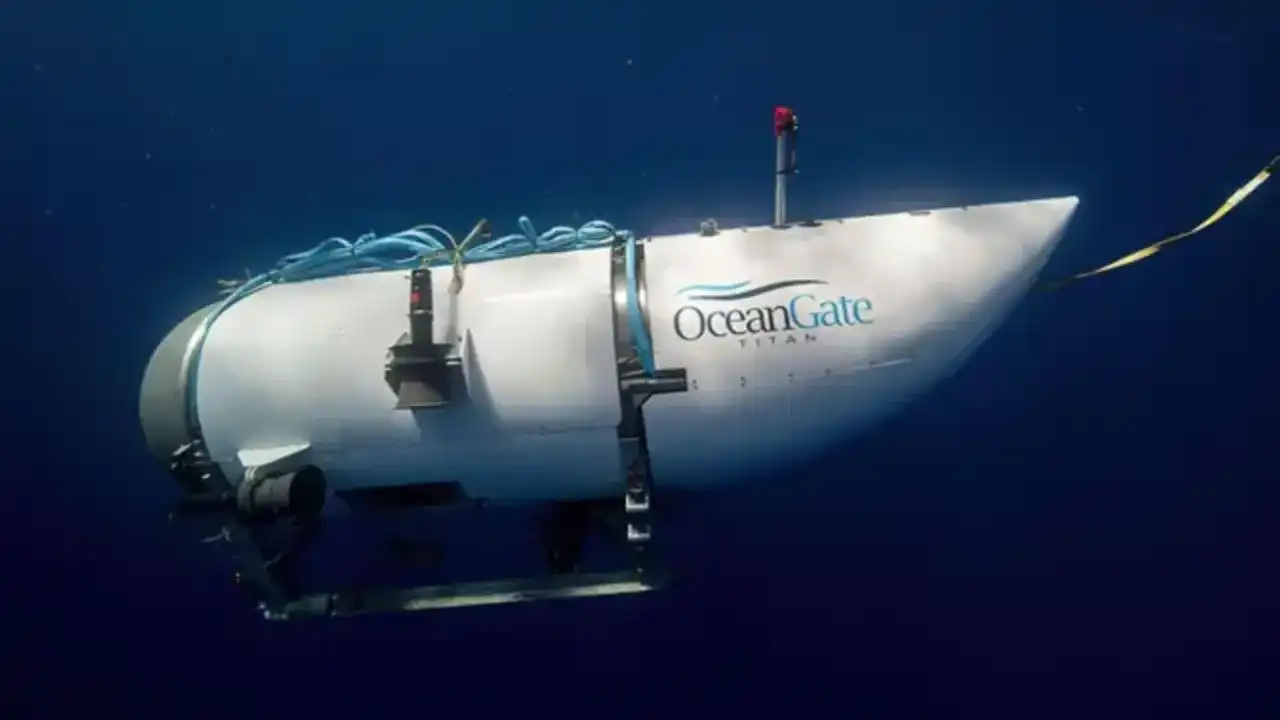
OceanGate's Titan implosion linked to poor engineering and safety oversights
OceanGate's Titan submersible tragically imploded during its journey to the wreck of the Titanic due to poor engineering practices and multiple failures in testing, according to an official report from the US National Transportation Safety Board (NTSB). The incident occurred in June 2023, resulting in the deaths of all five passengers on board, including OceanGate's chief executive, Stockton Rush.
The NTSB found that the engineering process behind Titan was "inadequate," leading to faults that prevented the vessel from meeting essential strength and durability requirements. The report indicated that OceanGate did not adequately test Titan, leaving them unaware of its actual strength and potential damage, which should have led to its removal from service before the ill-fated voyage.
Titan disappeared in the North Atlantic while attempting to dive to the Titanic wreck, located approximately 372 miles from St. John's in Newfoundland and Labrador, Canada. An earlier report from the US Coast Guard labeled the incident "preventable" and criticized OceanGate's "critically flawed" safety practices.
Passengers on the Titan paid up to $250,000 each for the dive, which included deep-sea explorer Paul-Henri Nargeolet, Shahzada Dawood, his 19-year-old son Suleman Dawood, and Hamish Harding. The Titan, measuring 6.7 meters (22 feet) long, had a passenger compartment made of carbon fiber and titanium in its domes and sections.
The submersible imploded at a depth of 3,363 meters (11,033 feet), while the Titanic wreck lies at 3,880 meters. This version of the Titan was the second iteration, as the first had been condemned by OceanGate after testing.
During the investigation, the NTSB discovered significant issues with OceanGate's safety culture. While some employees claimed safety was a priority, others, including a former director of marine operations, pointed out a culture where safety concerns, particularly regarding design, were ignored. One technician expressed worries about OceanGate's business model of designating paying clients as "mission specialists" instead of passengers, which is illegal under US regulations for experimental submersibles.
The technician recounted a conversation with Rush, where he suggested that if the US Coast Guard posed a problem, Rush would "buy himself a congressman" to resolve it. Since the incident, OceanGate has permanently ceased operations.
The NTSB report also highlighted that both US and international voluntary guidelines, as well as small passenger vessel regulations, were insufficient to ensure adherence to established industry standards. The NTSB has recommended that the US Coast Guard commission a study to evaluate how pressure vessels that carry people are assessed, with potential changes to improve safety standards.