UK hobbyist stuns maths world with 'amazing' new shapes
David Smith, a retired print technician from the north of England, was pursuing his hobby of looking for interesting shapes when he stumbled onto one unlike any other in November.
When Smith shared his shape with the world in March, excited fans printed it onto T-shirts, sewed it into quilts, crafted cookie cutters or used it to replace the hexagons on a soccer ball -- some even made plans for tattoos.
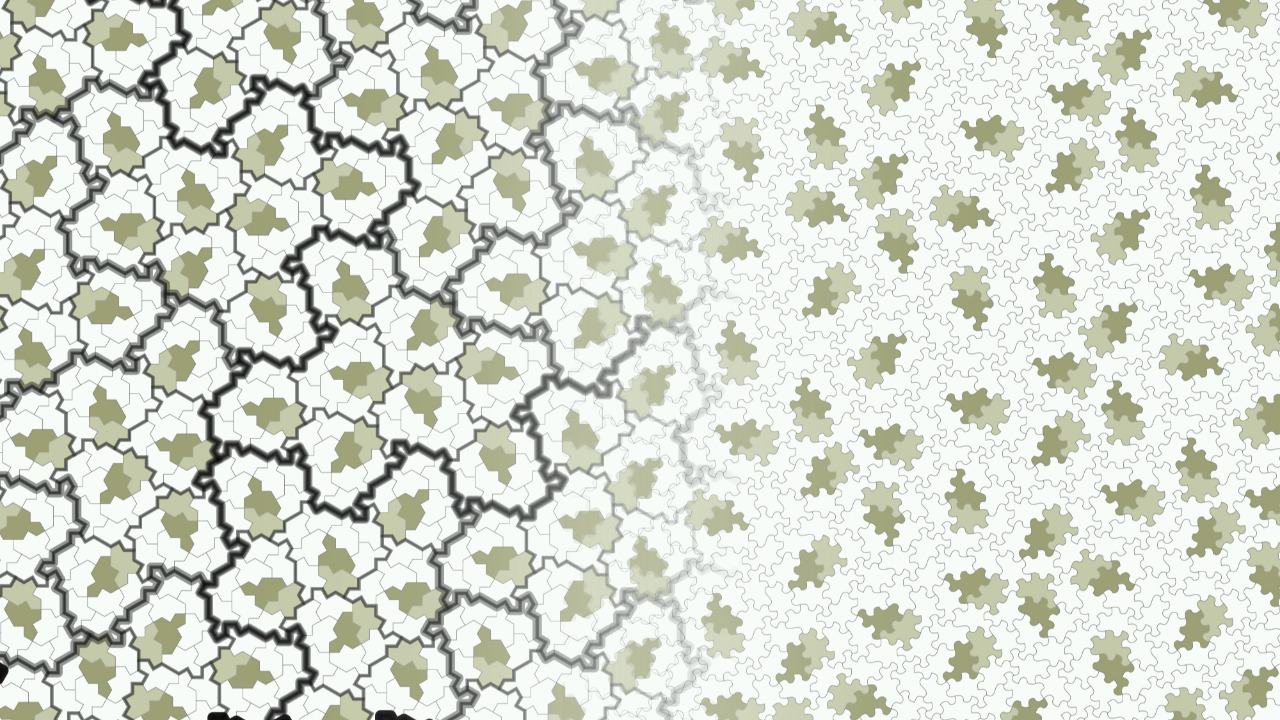
The 13-sided polygon, which 64-year-old Smith called "the hat", is the first single shape ever found that can completely cover an infinitely large flat surface without ever repeating the same pattern.
That makes it the first "einstein" -- named after the German for "one stone" (ein stein), not the famed physicist -- and solves a problem posed 60 years ago that some mathematicians had thought impossible.
After stunning the mathematics world, Smith -- a hobbyist with no training who told AFP that he wasn't great at maths at school -- then did it again.
While all agreed "the hat" was the first einstein, its mirror image was required one in seven times to ensure that a pattern never repeated.
But in a preprint study published online late last month, Smith and the three mathematicians who helped him confirm the discovery revealed a new shape -- "the spectre."
It requires no mirror image, making it an even purer einstein.
Craig Kaplan, a computer scientist at Canada's Waterloo University, told AFP that it was "an amusing and almost ridiculous story -- but wonderful".
He said that Smith, a retired print technician who lives in Yorkshire's East Riding, emailed him "out of the blue" in November.