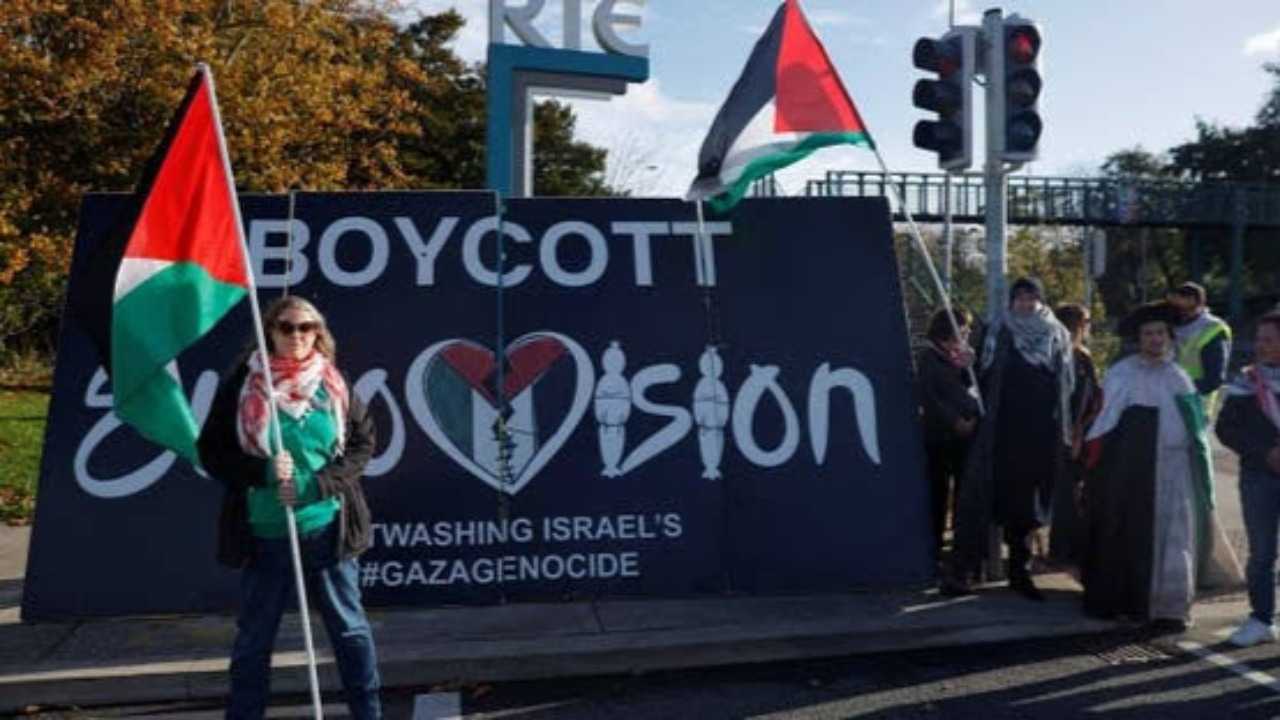
Eurovision members debate call to boycott Israel
Organisers of the Eurovision Song Contest -- the world's largest music event -- on Thursday began two days of debate about Israel's future participation, after mounting calls to exclude it, notably due to the war in Gaza.
Members of the European Broadcasting Union (EBU) met behind closed doors and under tight security in Geneva, following threats of mass withdrawals from the annual show if Israel takes part next year.
Voting arrangements are also on the agenda, after Israel's Yuval Raphael -- a survivor of Hamas's October 7, 2023 attack -- was propelled into second place overall after the public vote, prompting suspicions about manipulation.
Similar concerns were raised the previous year after Israel's Eden Golan was catapulted into fifth place despite lacklustre scoring from national juries.
Eurovision entries are scored first by professional juries, then the public by phone, text or online, which often radically alters the leader board.
Countries including Iceland, Ireland, Spain and the Netherlands have all threatened in recent months to pull out of Eurovision next year if Israel takes part.
Others, including Belgium, Finland and Sweden, have also indicated they were considering a boycott over the situation in Gaza.
The head of Spanish public broadcaster RVTE, Jose Pablo Lopez, on Thursday said that by not acting sooner, the EBU had subjected itself to "the greatest internal tension in its history".
"The sanctions against Israel for its repeated breaches at Eurovision should have been adopted at the executive level and not by shifting the conflict to the (general) assembly", he wrote on X.
Dutch broadcaster AVROTROS justified its threat to withdraw because of what it said was Israel's "serious violation of press freedom" in Gaza.
Countries cannot vote for their own entry, but AVROTROS accused Israel of "proven interference" at the last event this year by lobbying the public overseas to vote for it.