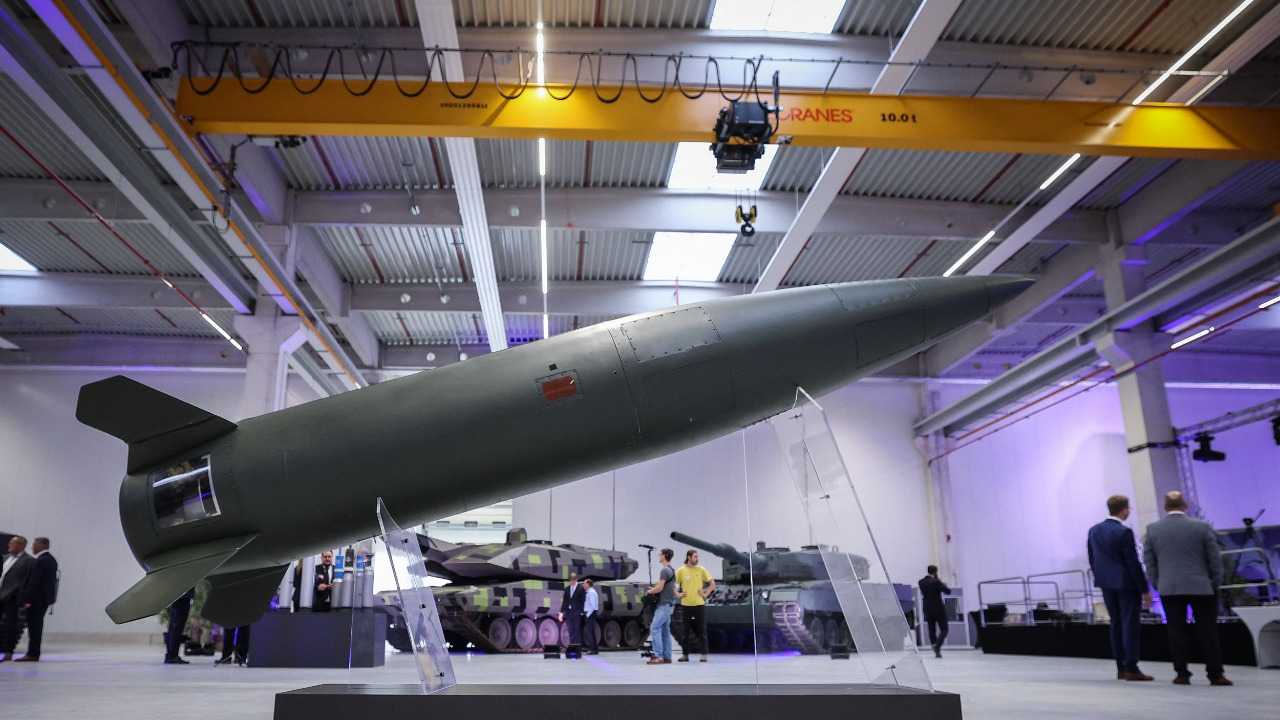
Defence giant Rheinmetall opens mega-plant as Europe rearms
German defense company Rheinmetall inaugurated Europe’s largest munitions plant on Wednesday, a development hailed by NATO chief Mark Rutte as a key boost to Western defenses. The facility, located in Unterlüß in northern Germany, spans 30,000 square meters—equivalent to five football fields—and is projected to produce 350,000 artillery shells annually by 2027.
Speaking at the opening ceremony, Rutte emphasized the plant’s strategic importance, saying, “This is absolutely crucial for our own security, for supporting Ukraine today, and to deter future aggression.” He noted that Europe faces challenges from both China and Russia but stressed that Europe and the United States are on track to strengthen defense production together.
Since Russia’s full-scale invasion of Ukraine in 2022, Europe has accelerated efforts to increase weapons manufacturing and military readiness, partly in response to pressure from former US President Donald Trump to assume greater responsibility for its own defense. Artillery shell production across the continent is now six times higher than two years ago. Germany has also eased strict debt rules to enable borrowing billions for military equipment.
German Defense Minister Boris Pistorius highlighted the need to develop Europe’s industrial base to transform defense spending promises into tangible capabilities. “The military and armed forces only work as well as the country behind them,” he said. “We need to succeed because we face a threat.” Pistorius added that Washington is monitoring Europe’s ability to deliver on these commitments and emphasized that NATO must become more European to remain transatlantic.
Rheinmetall CEO Armin Papperger praised political efforts to prioritize defense, noting that the plant’s construction was completed in just 14 months, far quicker than the usual two to three years. The facility will supply a record-breaking 8.5 billion-euro munitions order placed by the German government in July 2024. Chancellor Friedrich Merz has pledged to build Europe’s “strongest conventional army,” with defense spending expected to reach 162 billion euros by 2029—more than triple pre-war levels.
Rheinmetall’s Unterlüß site already produces guns and munitions for the Leopard 2 tank, which has been supplied to Ukraine. On stage, Papperger also signed a 550-million-euro agreement with Romania to build a plant expected to be completed within 18 months. Separately, Germany’s cabinet approved a draft law to increase armed forces recruitment, including provisions for compulsory service if volunteer numbers fall short. Currently, 182,000 soldiers serve in the armed forces, with plans to expand to 260,000.


