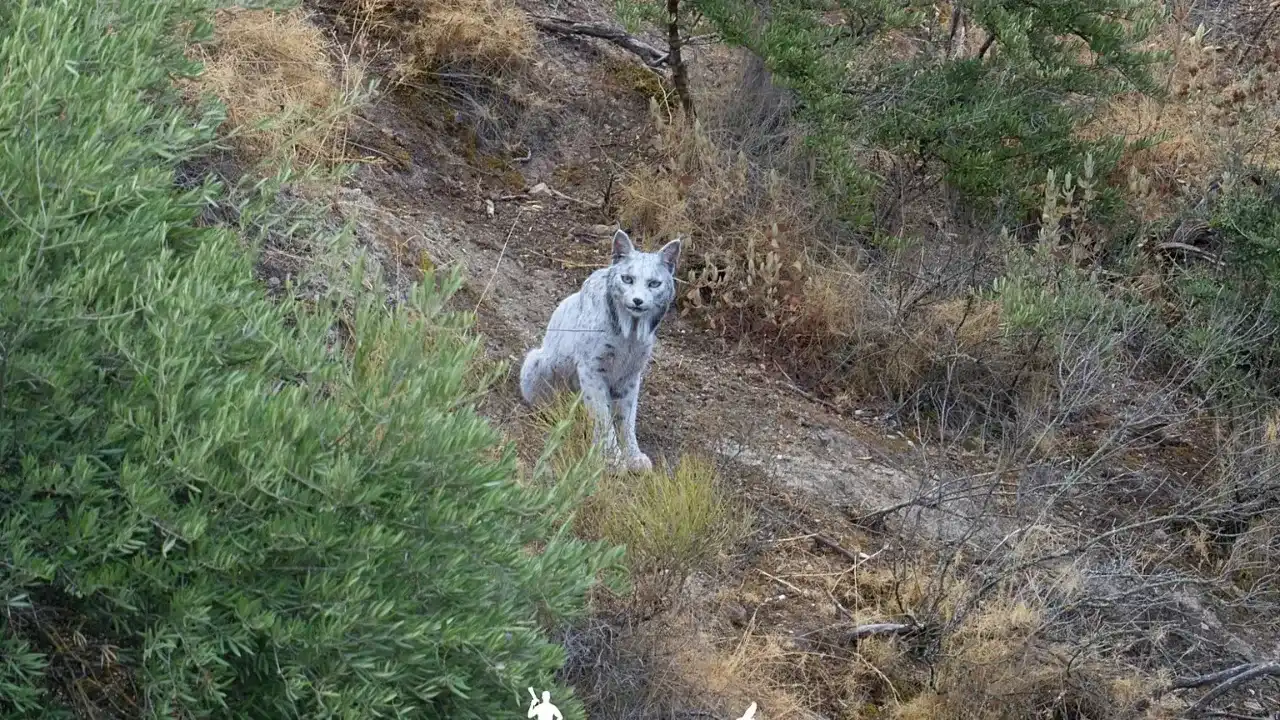
Rare Iberian lynx with leucism discovered in Southern Spain
The discovery of an Iberian lynx exhibiting leucism marks a significant milestone in the conservation efforts for this endangered species. Described by photographer Ángel Hidalgo as the "white ghost of the Mediterranean forest," this remarkable find was captured on one of his photo-trapping cameras in the mountainous regions of Jaén, southern Spain, on October 22.
Leucism, a genetic condition that results in a partial or total lack of pigmentation, differs from albinism in that it does not affect eye color. This unique lynx, identified as a member of the Lynx pardinus species, was recorded in the wild without a tracking collar, indicating its natural behavior in the habitat. The exact location of this sighting remains confidential.
Despite ongoing conservation efforts by Spanish and Portuguese authorities, the Iberian lynx is still classified as "vulnerable" by the International Union for Conservation of Nature. However, the Spanish Ministry of Ecological Transition reported that the population exceeded 2,000 individuals in 2023, with these big cats now inhabiting areas such as Sierra Morena, Montes de Toledo, the Spanish-Portuguese Guadiana basin, and Doñana. Some reintroduction efforts have even reached places like Sierra Palentina, which were previously thought unsuitable for the species.
Endemic to the Iberian Peninsula, the Iberian lynx plays a crucial role in its ecosystem as a predator, primarily targeting rabbits. The species is vital for maintaining the balance of the Mediterranean landscape's food chain. The potential extinction of the lynx would lead to an overpopulation of rabbits and disrupt the ecological equilibrium, highlighting the importance of continued conservation work.