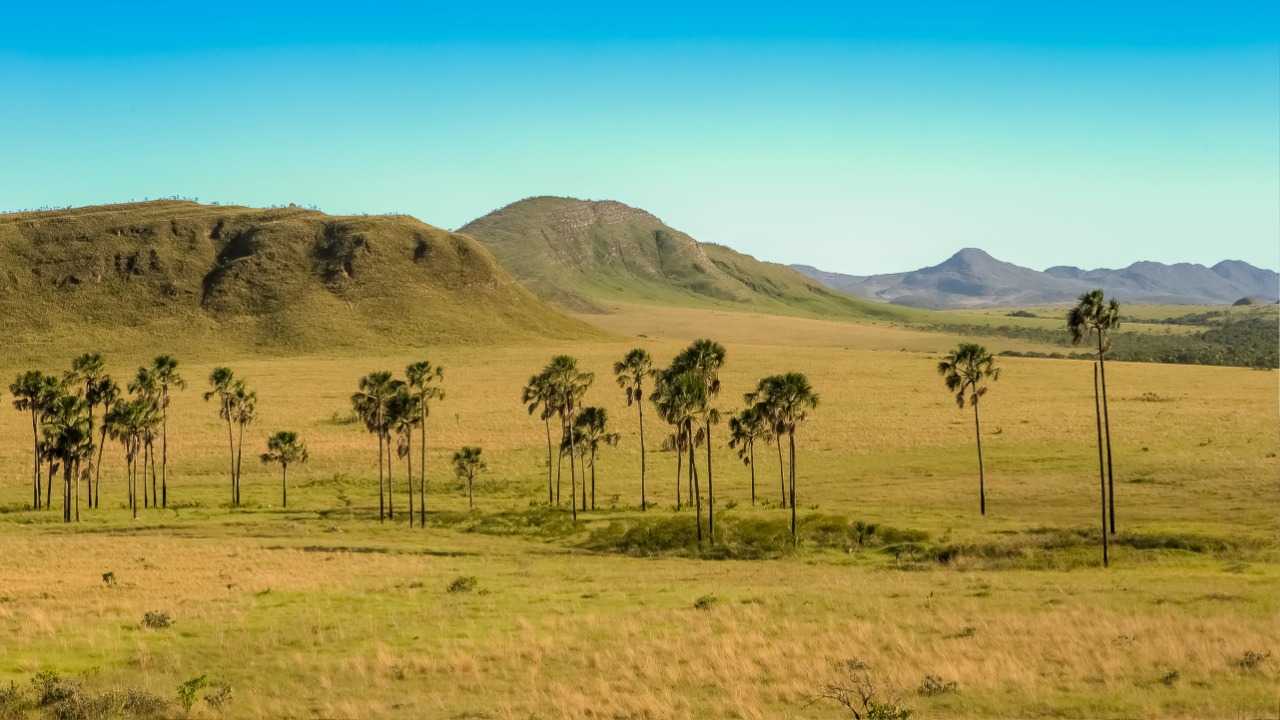
Deforestation in the Cerrado, Brazil, is progressing and has, for the first time, surpassed that of the Amazon.
In 2023, deforestation in the Cerrado, a savanna renowned for its biodiversity, significantly increased and for the first time exceeded that of the Amazon, according to the annual report by MapBiomas published on Tuesday.
More than 1.11 million hectares were destroyed in the Cerrado, located southeast of the Amazon, representing a 68% increase compared to the previous year, stated MapBiomas, a collective of Brazilian NGOs and universities.
These losses account for nearly two-thirds of Brazil's total deforestation and about 2.4 times the destruction observed in the Amazon, according to the report.
Last year, 454,300 hectares were deforested in the Amazon, a 62.2% decrease compared to 2022.
This is the first time that deforestation in the Cerrado, which spans 11 states in central and northeastern Brazil, has surpassed that of the Amazon since the collaborative platform MapBiomas began compiling data in 2019 from various satellite mapping systems.
"The face of deforestation is changing in Brazil, now concentrating in biomes dominated by savannas and grasslands, and decreasing in jungle areas," said Tasso Azevedo, coordinator of MapBiomas. However, "almost all deforestation in the country (97%) is driven by agricultural expansion," emphasized MapBiomas.
More than 93% of the destructions "showed at least one sign of illegality" or irregularity, according to data from the Amazon Environmental Research Institute (Ipam).
Overall, deforestation in Brazil decreased in 2023 for the first time in four years, registering an 11.6% drop compared to the previous year.
This report is bittersweet news for left-wing President Luiz Inacio Lula da Silva, who portrays himself as a champion in the fight against climate change and has pledged to eradicate illegal deforestation in Brazil by 2030, while deforestation had surged under his far-right predecessor, Jair Bolsonaro.
The destruction of native vegetation in this vast country has increasingly evident consequences, as exemplified by the historic floods that struck the state of Rio Grande do Sul (south) at the beginning of the month, causing at least 170 deaths and forcing about 600,000 people to leave their homes.