Shanghai evacuates 283,000 people as typhoon hits
Shanghai evacuated nearly 283,000 residents from coastal and low-lying areas on Wednesday as Typhoon Co-May made landfall in the bustling Chinese financial hub, unleashing heavy rainfall and strong winds. The city’s meteorological office issued an orange rainstorm alert—the second-highest level—as widespread flooding overwhelmed streets.
State media reported that more than 1,900 emergency shelters were activated across the city, accommodating those displaced. Nearly a third of all flights at Shanghai’s two major airports—about 640 in total—were canceled, with ferry and train services also affected.
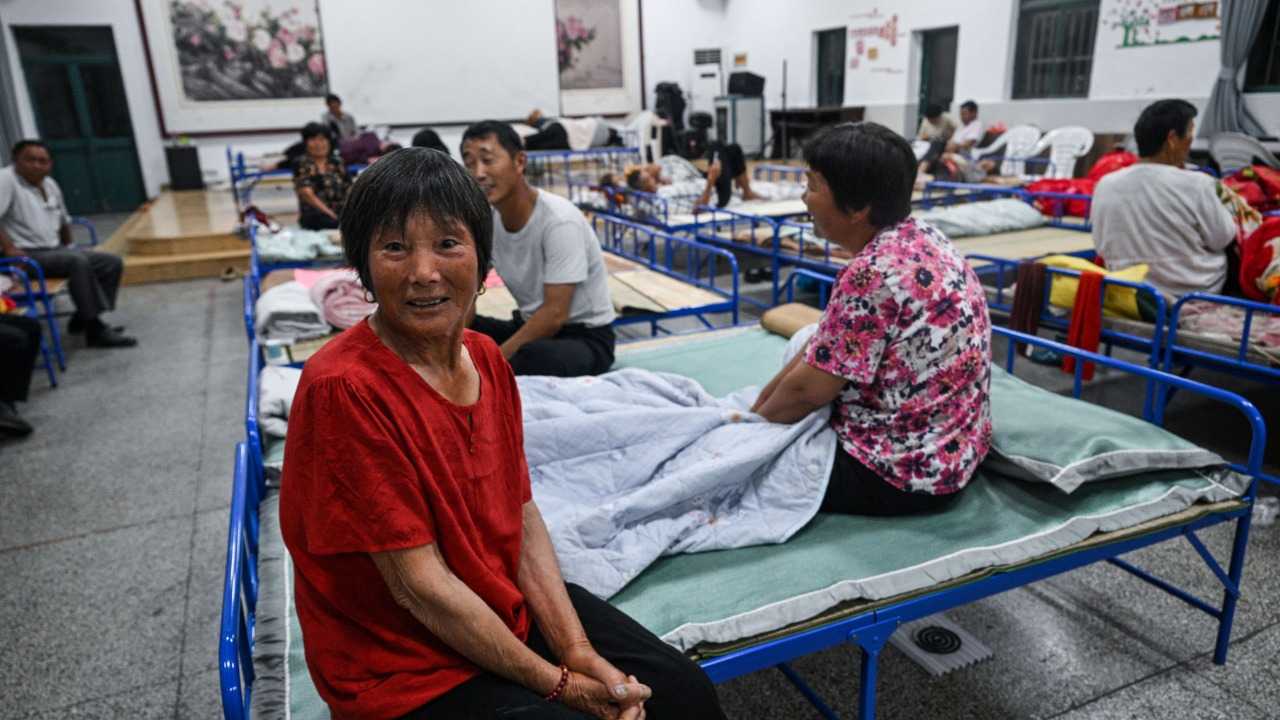
In the southern Fengxian district, 57-year-old watermelon farmer Yang Xiaoping, among those evacuated, said she felt safer at a community center shelter. “I hope to return home only after the danger passes... It's much safer here,” she told AFP. Around 20 mostly elderly evacuees were seen resting on iron beds or eating dinner with community staff present.
Shelter staff member Gong Huiyan noted that such evacuations are almost routine. “We conduct an evacuation every year, sometimes even two or three times,” she said. “We also conduct annual drills for typhoons and floods, so the process is smooth and well-organized.”
Co-May first struck China’s eastern Zhejiang province early Wednesday, packing winds of 83 km/h (52 mph). Coastal videos showed waves breaching walkways, while residents in Ningbo waded through ankle-deep water.
In a separate incident, authorities issued a tsunami warning after an 8.8 magnitude earthquake off Russia's Kamchatka Peninsula, though the warning was lifted later, as reported by CCTV.
Co-May, which had weakened to a tropical storm after passing the Philippines, regained strength over the South China Sea. According to Chen Tao of the National Meteorological Center, its impact extended beyond the south, potentially contributing to extreme weather in northern China. This week alone, torrential rains and flooding in the north have left at least 48 people dead and tens of thousands evacuated.
Chen explained, “Typhoon activity can influence atmospheric circulation... altering the transport of moisture northward.”
Natural disasters frequently strike China during summer, with some regions experiencing severe flooding while others endure intense heat. Though the world’s largest greenhouse gas emitter, China is also a leader in renewable energy and aims to achieve carbon neutrality by 2060.