Electric vehicle prowess helps China's flying car sector take off
At a factory in Guangzhou, southern China, a worker in white gloves inspects the propellers of a boxy two-seater aircraft fresh off the assembly line. The factory is part of a Chinese push to mass-produce flying cars, a sector that has long struggled globally due to technical and regulatory challenges. China is leveraging its expertise in drones and electric vehicles (EVs), along with government support, to gain an early edge.
“China has the potential to establish a competitive edge,” said Zhang Yangjun, professor at Tsinghua University’s School of Vehicle and Mobility. “Future competition will hinge on cost control and supply-chain efficiency, areas where China is strong.”
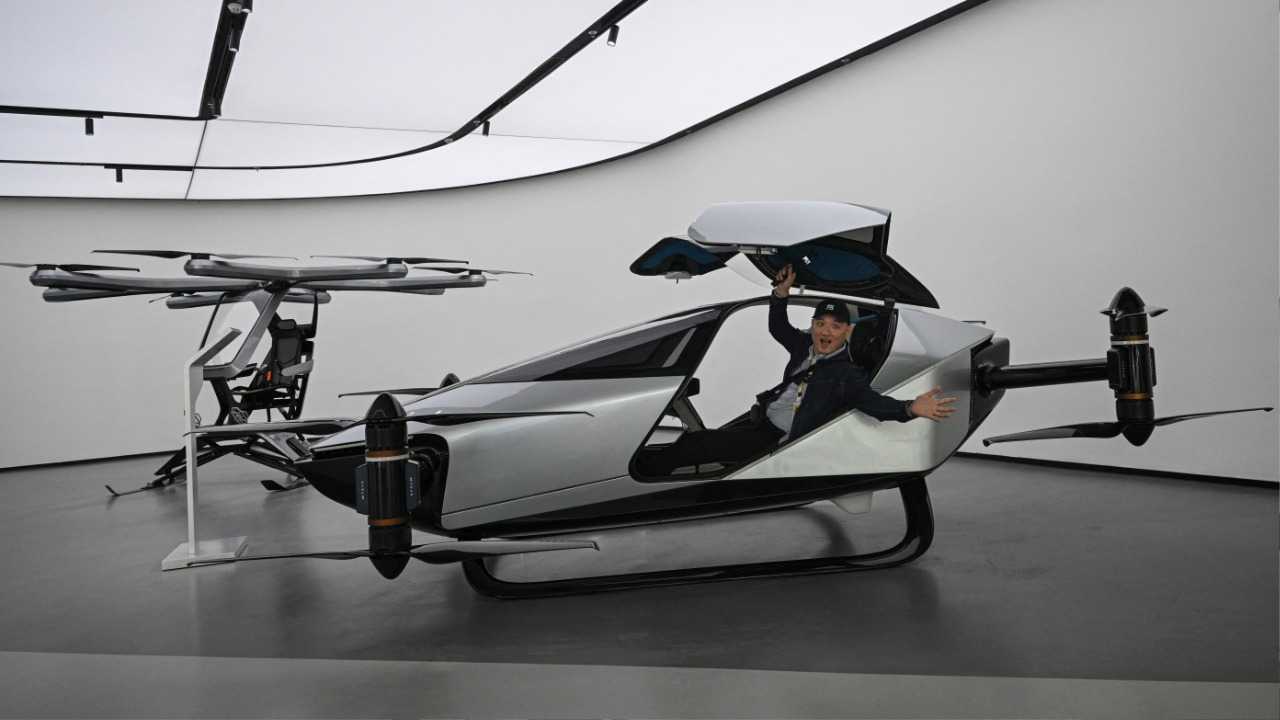
Inside the factory, logistics robots ferry parts to assembly stations. Workers construct lightweight six-propeller aircraft capable of vertical takeoff. These are designed to fit into a modular “Land Aircraft Carrier,” made by Aridge, a subsidiary of Chinese EV maker XPeng. The flying module is stored and charged in a wheeled “mothership.” Trial production began in November, with the factory able to produce one aircraft every 30 minutes. Deliveries are planned for next year, with over 7,000 pre-orders already placed.
Despite progress, challenges remain. “Regulations, consumer comfort, and airspace management all need to catch up gradually,” said Michael Du, Aridge’s vice president.
Globally, competition is intensifying. Tesla CEO Elon Musk teased a flying car prototype, calling it “crazier than all James Bond cars combined.” Flying cars date back to 1917, when American aviation pioneer Glenn Curtiss built the first prototype, but only recent advances in electric motors and batteries have made practical designs feasible.
Companies such as Joby, Archer, Aridge, EHang, and Volant have conducted manned test flights. EHang became the first company approved for commercial flying car operations, planning an air taxi service within three years. Aridge has yet to gain approval.
China sees the “low-altitude economy”—flying cars, drones, and air taxis—as a strategic sector for the next five years, with provincial governments easing restrictions. Boston Consulting Group predicts China’s flying car market will reach $41 billion by 2040.
China’s advantage lies in its mature EV supply chain and an “engineer dividend” that allows rapid resolution of technical issues. Brandon Wang, a Beijing-based investor, says these factors put China ahead of global competitors.
While flying cars remain in early development, Chinese companies are betting on technology, regulatory support, and supply-chain efficiency to turn the futuristic vision into reality, potentially redefining personal mobility in the years ahead.