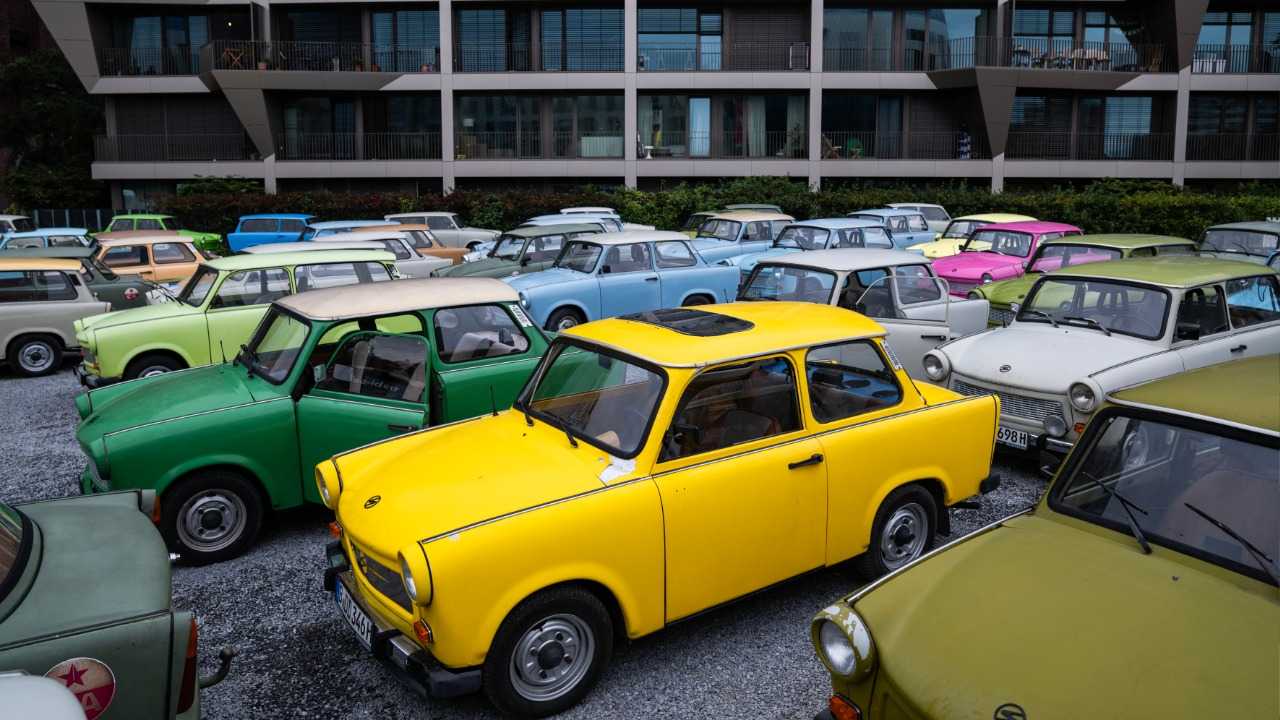
35 years later, beloved East German car still sputters on
The Trabant, often labeled the worst car ever made, with its boxy design, cramped interior, and notorious clouds of blue smoke billowing from its exhaust, somehow refuses to fade into history. Despite its poor reputation, a dedicated group of enthusiasts continues to keep refurbished Trabis on the road, celebrating the vehicle's quirky charm. As Germany prepares to mark 35 years of reunification, the number of Trabis in circulation is actually increasing, with around 40,800 currently registered, up from 33,000 a decade ago.
Glenn Kuschan, a 58-year-old car repair shop owner south of Berlin, counts several Trabant owners among his customers, ranging from those who grew up with the cars to younger enthusiasts drawn to their original design. Kuschan himself is the proud owner of 23 Trabis, including a white model that once belonged to his father and has now surpassed 500,000 kilometers.
Produced from 1957, the Trabant was a product of East Germany’s communist regime, designed to be a car for the people. Its bodywork was made from plastic mixed with paper or cotton fiber, saving on steel imports, and its two-stroke engine emitted thick clouds of burnt oil and gasoline. The backseat windows didn’t open, and with a top speed of 112 kilometers per hour, it was a far cry from the sleek, powerful vehicles of West Germany like BMW and Mercedes. Despite this, the Trabi became a beloved symbol in East Germany for its durability and distinctive design.
East Germans often waited up to 15 years for their Trabants, which were available in just three colors: ivory, sky blue, and peppermint green. When the Berlin Wall fell in 1989, many East Germans drove to the border in their Trabis, waiting in long queues with engines puffing fumes. After reunification, many sold their Trabis for more modern cars, while others abandoned them at the border.
The last Trabant rolled off the production line in 1991, but today, visitors to the Trabi Museum in Berlin can tour the city in a Trabant, passing famous communist landmarks. Thomas Schmidt, 49, who works at the museum, fondly remembers growing up in a Trabi. He describes it as "indestructible" and praises its simple technology, saying, "If you have a hammer, pliers, and some wire, you can get to Leningrad."