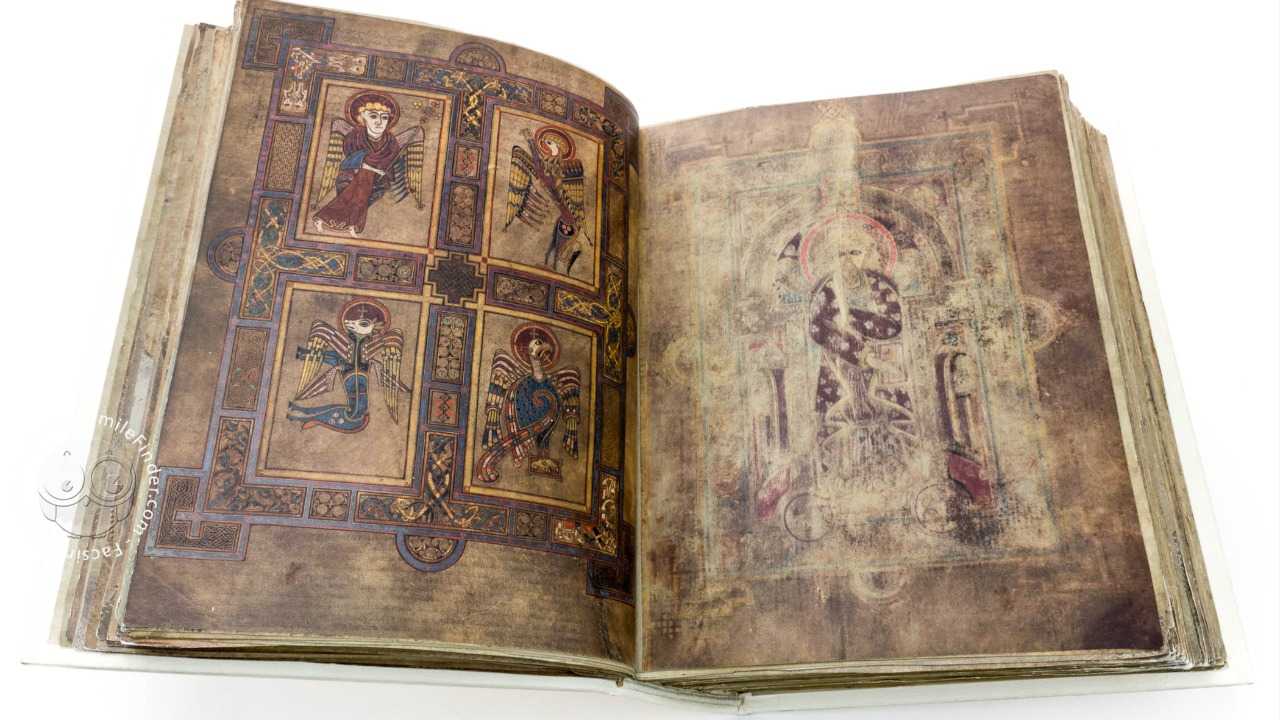
Book of Kells: A 1,200-Year-Old Manuscript Created by Monks Fleeing Viking Raids
The Book of Kells is a 1,200-year-old illuminated manuscript containing the four Christian gospels, created by Celtic Christian monks on the island of Iona in Scotland’s Inner Hebrides around the year 800 AD. This large, richly decorated manuscript is renowned for its stunning illustrations and intricate calligraphy, all painstakingly crafted by hand, a process that took many hours of work by dedicated monks. At the time of its creation, books were not printed but copied by hand, a task typically undertaken by monastic communities, according to Live Science.
The Book of Kells is considered one of the finest examples of the "Insular" style of illuminated manuscripts, which flourished in Ireland and Britain during the post-Roman period. This style is known for its elaborate initial letters, vibrant colors, and intricate designs featuring Celtic motifs and mythical creatures. The manuscript is written in Latin on vellum, a type of parchment made from calfskin, and spans 680 pages. Scholars believe it was created by at least three different monks, and although some pages are missing — likely due to a theft in the 11th century — it remains remarkably intact.
Originally, the Book of Kells was produced by monks devoted to St. Columba, the sixth-century Irish missionary who spread Christianity in Scotland. However, as Viking raids became increasingly common along the British coastline, the monks of Iona were forced to relocate for safety. In the early 800s, they moved to Ireland, taking the manuscript with them. There, it was housed at a monastery in Kells, County Meath, where it remained for centuries. During the tumultuous period of Oliver Cromwell’s conquest of Ireland, the manuscript was moved to Dublin for protection.
In 1661, the Book of Kells was donated to Trinity College Dublin, where it remains on display to this day. The college has also digitized the manuscript for wider access. The Book of Kells stands as a remarkable testament to the skill and devotion of its creators, and it remains an iconic symbol of Ireland’s cultural and religious heritage.