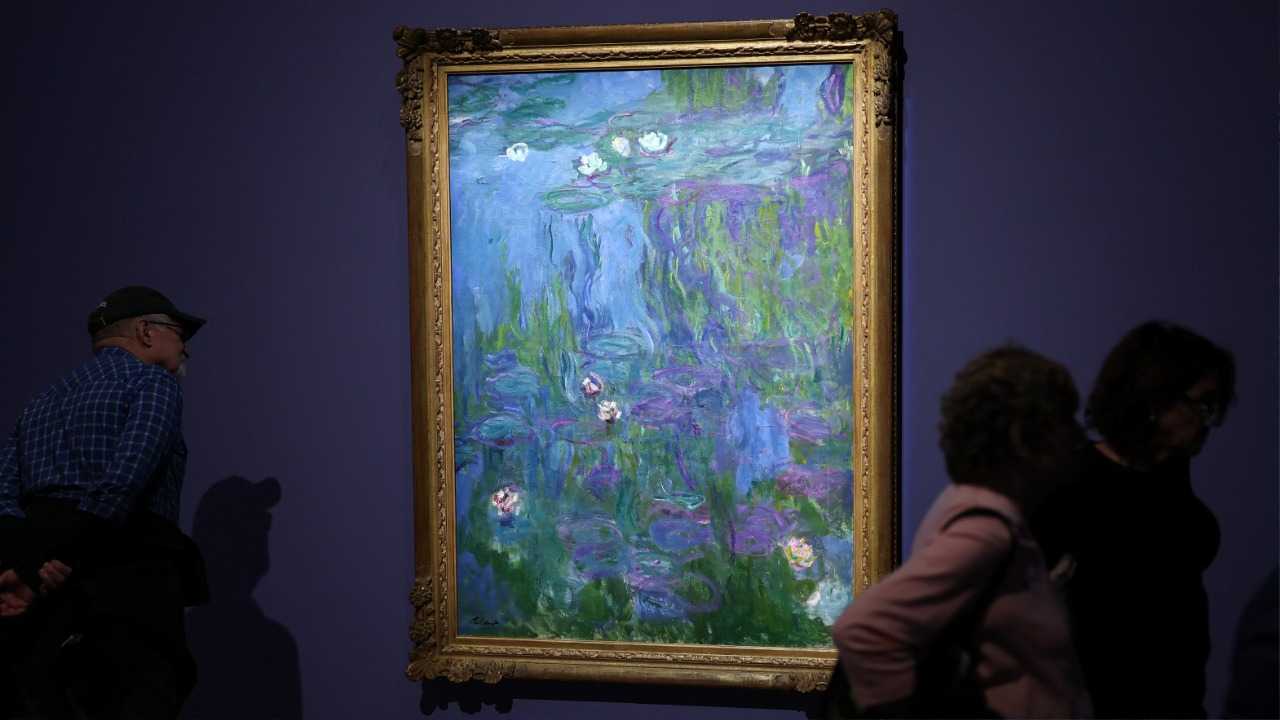
Exhibit on Monet's prolific Venice visit debuts at Brooklyn Museum
In 1908, Claude Monet was 68 years old and deeply immersed in his celebrated water lilies series when he reluctantly agreed to travel to Venice with his wife, Alice Hoschedé. Initially hesitant to leave his home and studio in Giverny, the French Impressionist master soon found himself captivated by the floating city’s shimmering light and reflections. What began as a reluctant journey turned into one of Monet’s most productive periods, inspiring 37 paintings that captured Venice’s ethereal beauty.
Now, the Brooklyn Museum in New York is honoring that transformative experience with a major exhibition, Monet and Venice, opening Saturday and running until February 2026. The show explores Monet’s time in Venice through 19 of his Venetian masterpieces, as well as postcards, photographs, and other archival materials that trace the couple’s journey. Among the featured works are The Palazzo Ducale and The Grand Canal, Venice, luminous examples of Monet’s signature style — fluid, radiant, and profoundly attuned to light and reflection.
“He fell in love with the city, and he had a wonderful time there with Alice,” said Lisa Small, the exhibition’s co-curator. “They wanted to come back, but Alice became ill and died sadly in 1911.” Monet completed the Venetian paintings back in Giverny, Small explained, “in a state of sadness and mourning,” imbuing the works with a quiet poignancy that reflects both his artistic devotion and personal loss.
Venice itself emerges as a central character in the exhibition. Alongside Monet’s canvases are works by other masters who interpreted the same city across centuries — Canaletto (1697–1768), J.M.W. Turner (1775–1851), and John Singer Sargent (1856–1925) — each illuminating a different vision of its architecture, atmosphere, and elusive light.
The exhibition’s centerpiece is an immersive gallery where Monet’s paintings are accompanied by a specially composed symphony by Niles Luther, the museum’s composer-in-residence. The music evokes the “symphony of colors” and “harmony of brushstrokes” that critics often used to describe Monet’s later works. “Especially toward the end of his career,” said Small, “critics spoke of his art in musical terms, as if his brushstrokes were an orchestra.”
Through this union of painting and music, Monet and Venice invites visitors to experience the emotional and sensory depth of Monet’s Venetian vision — a journey born of reluctance, transformed into beauty, and completed in remembrance.