3,700-Year-Old Italian Burial Reveals Earliest Evidence of Father-Daughter Incest
Archaeologists in Italy have uncovered what may be the oldest genetic evidence of a father-daughter relationship producing offspring. A recent study of remains from a Bronze Age cemetery in southern Italy revealed this startling discovery.
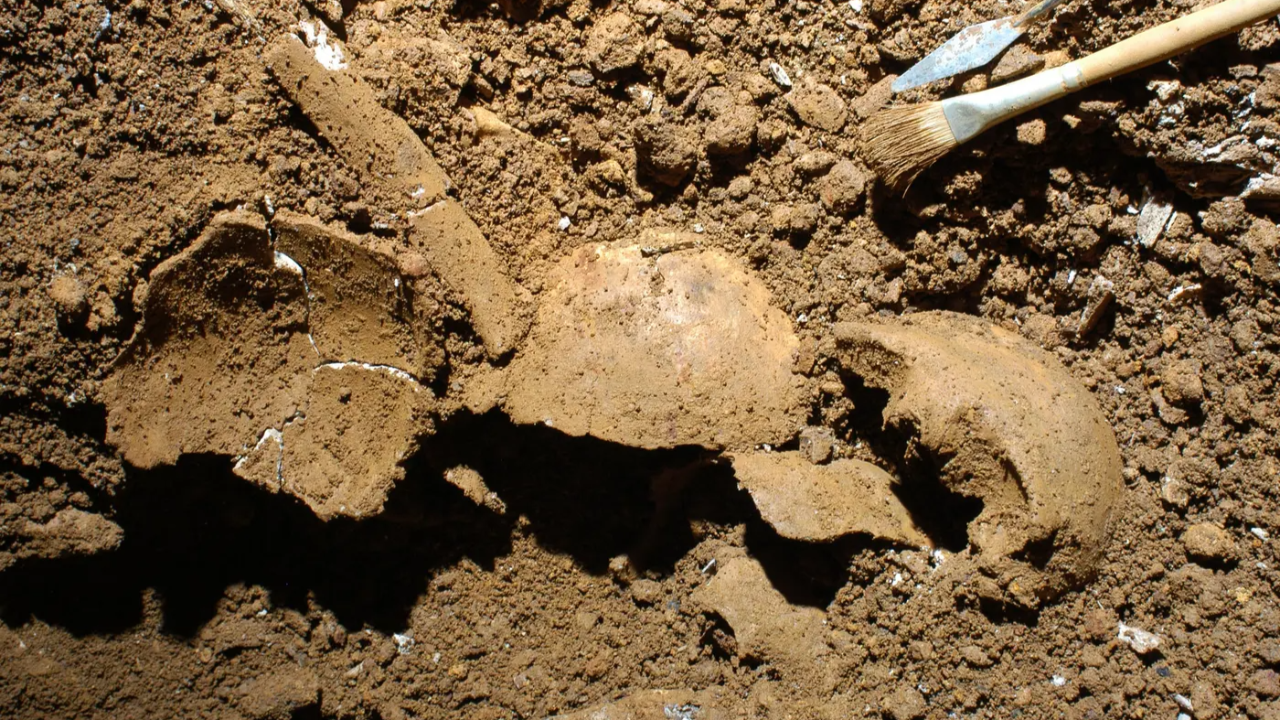
The excavation took place at Grotta della Monaca in Calabria, a cave site used as a burial ground between 1780 and 1380 B.C. Researchers analyzed DNA from 23 individuals buried there, aiming to understand the genetic diversity of the community. While many findings reflected distant familial connections, one case stood out for its extreme genetic similarity, according to LiveScience.
The remains of a pre-adolescent male showed the highest levels of long runs of homozygosity (ROH) ever reported in ancient DNA studies. ROH segments are stretches of DNA inherited from both parents. High ROH levels indicate inbreeding, while lower levels suggest genetic mixing. Further genetic analysis confirmed that this boy was the direct offspring of a first-degree incestuous union — the son of an adult male buried at the site and that male’s own daughter. Interestingly, the boy’s mother’s remains were not identified in the cemetery.
While close-kin relationships appear in other ancient populations — such as sibling unions among Neanderthals, Stone Age Europeans, and royal families in ancient Egypt — parent-child reproduction is far rarer. First-degree unions like this carry a high risk of genetic disorders, but analysis of the teenager’s DNA revealed no signs of rare hereditary conditions.
Most individuals buried at Grotta della Monaca exhibited ROH patterns consistent with distant familial relations spanning several generations. The father-daughter union, however, was an exceptional case and unprecedented in the archaeological record.
The reasons behind this unusual behavior remain unclear. The community did not appear particularly small, nor did it have a hierarchical system where close-kin unions would consolidate wealth or power. Researchers suggest the union may have been socially sanctioned within this group, possibly explaining why the adult male was buried in a cemetery otherwise dominated by women and children.
Whether the event was accepted by the broader community, an isolated incident, or the result of coercion may never be known. “This exceptional case may indicate culturally specific behaviors in this small community, but its significance ultimately remains uncertain,” said Alissa Mittnik, co-author of the study and archaeogeneticist at the Max Planck Institute for Evolutionary Anthropology.
Published in Communications Biology, this finding marks the earliest known evidence of a father-daughter reproductive relationship in the archaeological record.