Ancient DNA reveals secrets of the 'Green Sahara' and its isolated inhabitants, the 'Takarkori' people of North Africa
The Sahara Desert, known today for its extreme aridity, was once a lush green savannah teeming with life, rich in bodies of water, during a period from approximately 14,500 to 5,000 years ago. Recent research has uncovered that this region, particularly what is now Libya, was home to a unique lineage of people who lived in isolation from other populations.
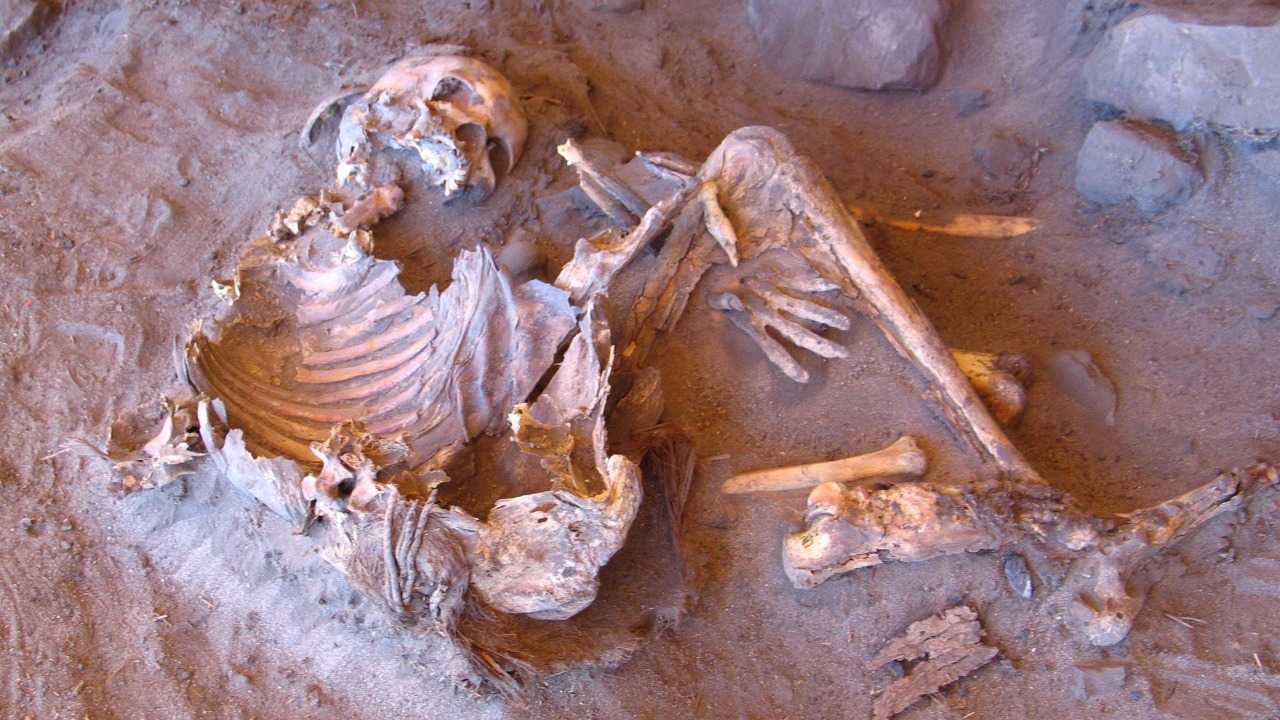
Researchers analyzed the first genomes from individuals who lived in what is referred to as the "Green Sahara." They obtained DNA from two females whose remains were discovered at a rock shelter called Takarkori in southwestern Libya. These individuals, naturally mummified, represent the oldest-known mummified human remains. According to archaeogeneticist Johannes Krause from the Max Planck Institute for Evolutionary Anthropology, "At the time, Takarkori was a lush savannah with a nearby lake, unlike today's arid desert landscape."
The genomic analysis revealed that the Takarkori individuals belonged to a distinct and previously unidentified human lineage that remained genetically isolated from sub-Saharan and Eurasian populations for thousands of years. Krause noted, "Intriguingly, the Takarkori people show no significant genetic influence from sub-Saharan populations to the south or Near Eastern and prehistoric European groups to the north." This suggests that, despite engaging in animal husbandry—a cultural practice that originated outside Africa—they maintained genetic isolation.
Archaeological evidence supports the notion that these people were pastoralists, herding domesticated animals. Artifacts uncovered at the site include stone tools, pottery, woven baskets, and carved figurines, indicating a complex society.
The ancestry of the two Takarkori individuals can be traced back to a North African lineage that diverged from sub-Saharan populations around 50,000 years ago. This timeline coincides with the period when other human lineages began migrating out of Africa into the Middle East, Europe, and Asia, ultimately becoming the ancestors of non-African populations. Krause pointed out, "The Takarkori lineage likely represents a remnant of the genetic diversity present in northern Africa between 50,000 and 20,000 years ago."
From around 20,000 years ago onward, genetic evidence shows an influx of groups from the Eastern Mediterranean, followed by migrations from Iberia and Sicily around 8,000 years ago. However, the Takarkori lineage persisted in isolation for much longer than expected. The Sahara only became habitable around 15,000 years ago, leaving the exact location of their original homeland uncertain.
This lineage remained isolated for most of its existence before the Sahara transformed into the largest hot desert around 3,000 BC, marking the end of the African Humid Period.