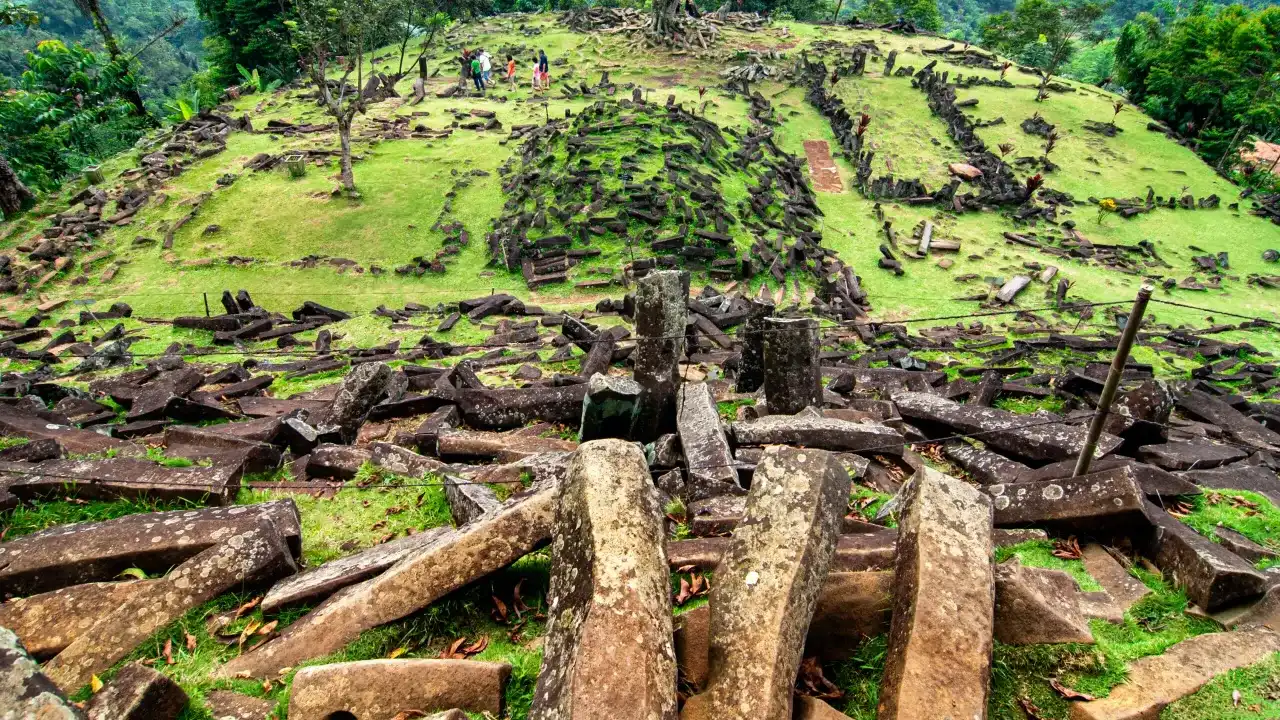
World's oldest pyramid discovered in Gunung Padang, Indonesia, researchers say
Beneath the rolling hills of West Java, Indonesia, lies Gunung Padang, a site that could potentially challenge the timeline of human civilization.
Known as the "mountain of enlightenment" by the local Sundanese, this enigmatic structure is believed by some to be the oldest pyramid on Earth, reported The Brighter Side of News.
If confirmed, its origins would predate the great Pyramids of Giza and Stonehenge, significantly altering our understanding of architectural history.
As excavations continue, researchers are uncovering evidence of a megalithic structure that defies conventional historical narratives.
Gunung Padang stands as a testament to the ingenuity of ancient builders, who engineered this architectural marvel long before the advent of agriculture or known civilizations.
Its construction raises profound questions about the technological capabilities and societal organization of prehistoric humans.
Culturally significant to locals, Gunung Padang is recognized as a 'punden berundak,' or stepped pyramid.
The carefully arranged terraces leading to its summit suggest an intentional design far more complex than previously assumed. Until recently, much of the structure's history remained obscured beneath layers of earth and vegetation.
Recent investigations by Indonesian scientists have revealed that Gunung Padang may not simply be a natural hill, but rather a pyramid with a carefully shaped core.
Researchers believe it was built using hardened lava flows from an extinct volcano, intricately manipulated to create a stable base.
There is also speculation about hidden chambers within the pyramid, raising questions about its original purpose and potential contents.
Using advanced radiocarbon dating techniques, scientists have traced the earliest phases of construction back to the last glacial period, suggesting it could be as old as 27,000 years.
If confirmed, this staggering revelation would necessitate a dramatic revision of human prehistory, placing Gunung Padang significantly earlier than Göbekli Tepe in Turkey, currently recognized as the world's oldest known megalithic structure.
The implications of Gunung Padang's age are profound. If it predates all known monumental structures, its builders must have possessed extraordinary knowledge and skill.
The construction of such an elaborate site challenges traditional views of early human societies, suggesting that advanced engineering and complex social organization existed far earlier than previously believed.
These findings could reshape the narrative of prehistoric human achievement and offer insights into lost civilizations that thrived long before recorded history.
The story of this Indonesian site has unfolded over millennia, with a deep history reflected in layers of human endeavor.
Researchers, including geologist Danny Hilman Natawidjaja from Indonesia's National Research and Innovation Agency, have employed advanced methods like core drilling, ground penetrating radar, and subsurface imaging from 2011 to 2015 to explore the site's complexities.