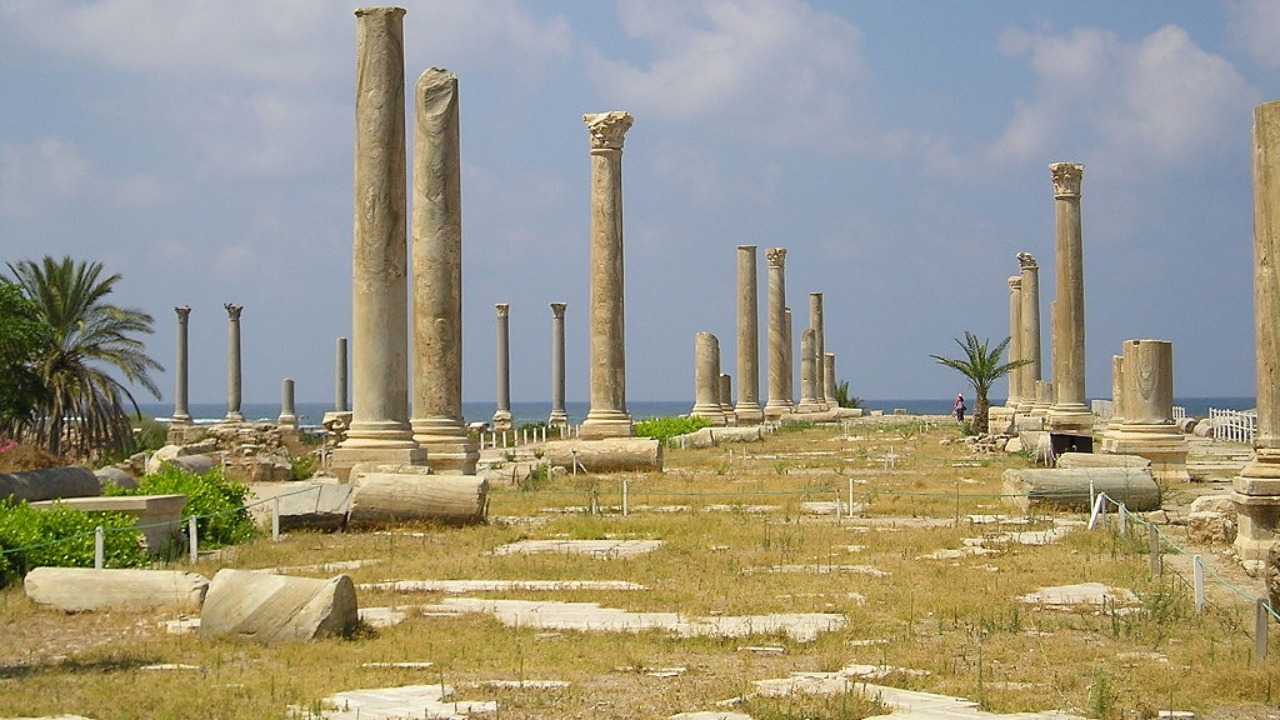
Archaeology: What the rediscovered ancient Phoenician port of Tyre tells us
Jean-Philippe Goiran, a researcher at CNRS and specialist in coastal geoarchaeology, shares recent archaeological advancements at Tyre, a site classified as a UNESCO World Heritage Site. Research reveals that coastal landscapes have evolved over time under the influence of natural elements and human activities. Through techniques such as sediment coring and radiocarbon dating, scientists have uncovered a submerged port structure of 180 meters, thus confirming the presence of a lost Phoenician port.
The port history of Tyre, spanning 3,500 years, is marked by human interventions, notably the construction of a causeway by Alexander the Great in 332 BC, which altered the coastal landscape by connecting the island of Tyre to the mainland. Excavations reveal the existence of two ancient ports, one to the north and the other to the south, but only the structure of the northern port is identified beneath the modern port of Tyre.
Research suggests that the southern port was abandoned due to rapid sand accumulation caused by the construction of Alexander's causeway. A partnership between French and British teams aims to document these discoveries, particularly through terrestrial coring and underwater excavations.
French and Lebanese scientific teams (Directorate General of Antiquities, Lebanon) have expanded the underwater prospecting area in search of submerged ancient port structures. Scientists have conducted a campaign of deep coring to explore the eastern sector, now silted, of the ancient Phoenician island of Tyre.
Underwater, they discovered a long port structure of 180 meters, submerged three meters deep, composed of Phoenician-sized blocks. Further northeast, coring reveals a clayey sequence, typical of a port facies, dated by radiocarbon method to the Phoenician era. The combination of these two elements (structure and basin) thus confirms the presence of the lost Phoenician port.
The Phoenicians, a Semitic people of antiquity, played a crucial role in the maritime and commercial development of the Mediterranean. Tyre, one of their main cities, thrived due to its strategic location and natural resources, such as purple dye and cedar wood. The city was destroyed by Alexander the Great in 332 BC and was later under Roman control until the 1st century BC. Today, it is a small Lebanese city called Sour, whose economy depends on fishing and pottery trade, while being influenced by regional and political conflicts in Lebanon.