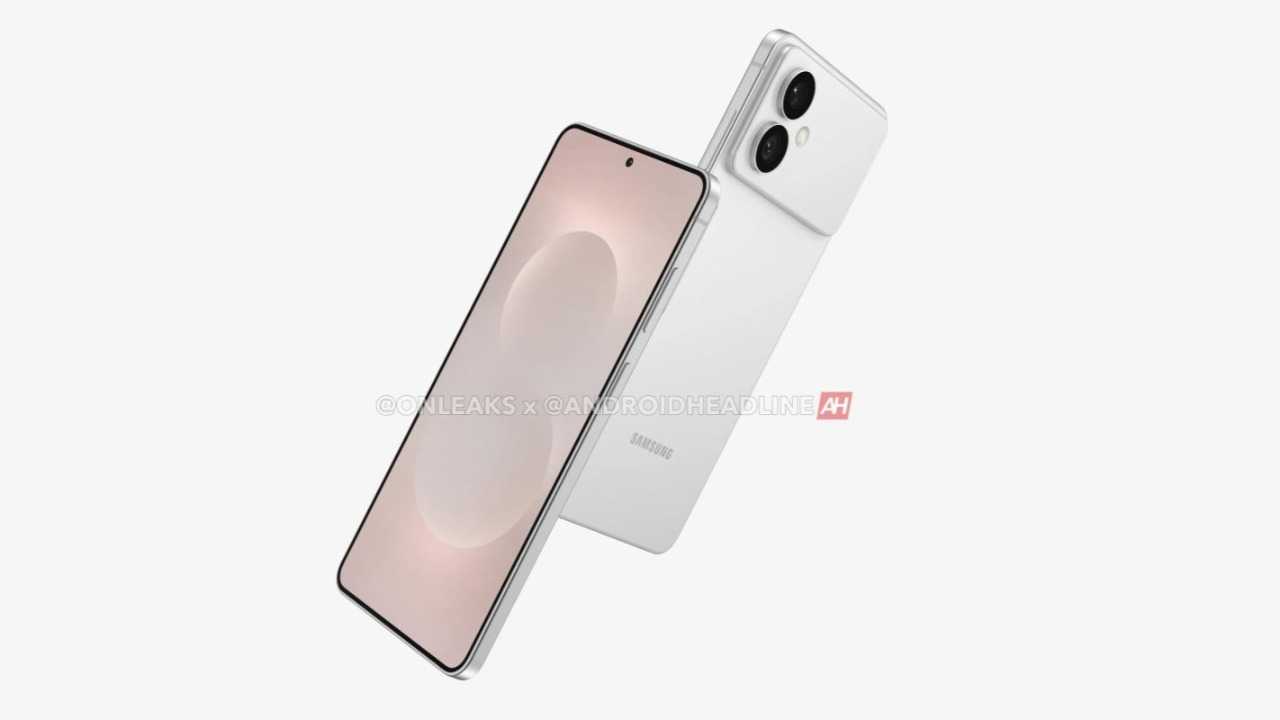
Galaxy S26 Edge Renders Reveal iPhone 17-Inspired Design with Qi2 Magnet Support
Fresh renders of Samsung’s upcoming Galaxy S26 Edge, shared by OnLeaks and Android Headlines, showcase a striking design overhaul that seems to borrow inspiration from Apple’s rumored iPhone 17 Pro,according to 9To5 Google. The standout feature is the new camera island: a bold, horizontal module stretching across the rear with two lenses aligned to the left side. This shift from Samsung’s familiar vertical “floating lens” design makes the S26 Edge one of the most visually different Galaxy flagships in recent years (9to5Google, The Verge).
Another eye-catching detail is the device’s dramatic thinness. At just 5.5 mm, the S26 Edge is even slimmer than the already-thin Galaxy S25 Edge, which measured 5.8 mm. However, the camera bump increases the total thickness to 10.8 mm, giving the phone a unique balance of ultra-thin body and pronounced rear protrusion (Android Authority).
Perhaps the most practical upgrade is the addition of Qi2 magnetic wireless charging. While the S25 series was Qi2-ready, the new renders strongly suggest Samsung is fully embracing the standard by integrating magnets for more reliable alignment with chargers—similar to Apple’s MagSafe and Google’s Pixel 10 lineup (MacRumors, Business Standard).
Battery improvements are also rumored. Reports indicate the S26 Edge could house a 4,200 mAh battery, up from the S25 Edge’s 3,900 mAh. Samsung may be relying on newer battery chemistry to deliver longer endurance without adding bulk (Tom’s Guide, TechEBlog).
The S26 Edge is expected to replace the “Plus” model in Samsung’s lineup, joining the Galaxy S26 Pro and S26 Ultra. Together, these three devices will form the company’s flagship lineup for early 2026 (TechRadar).
Launch timing is anticipated in January or February 2026, continuing Samsung’s pattern of unveiling its Galaxy S devices early in the year (Android Central).
Overall, the Galaxy S26 Edge leaks hint at a flagship that combines sleeker hardware, bigger battery gains, and next-gen charging—all while taking a page from Apple’s playbook in design.