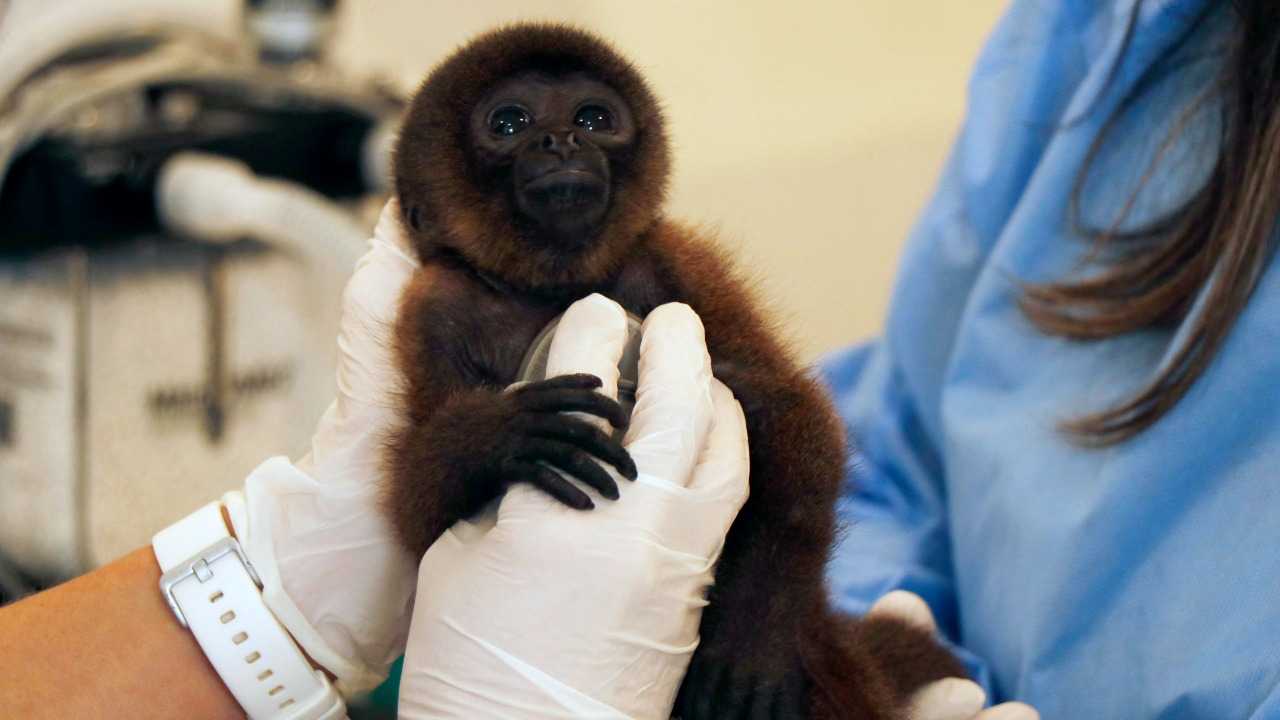
Researchers successfully produce a monkey chimera featuring dual sets of DNA
Chinese scientists have successfully developed a monkey chimera containing two sets of DNA, a breakthrough that holds promise for medical research and endangered species conservation. This groundbreaking experiment involved combining stem cells from a cynomolgus monkey with a genetically distinct embryo from the same species, resulting in the world's first live birth of a primate chimera using stem cells. The monkey lived for 10 days before being euthanized.
The researchers, affiliated with the Guangzhou Institute of Biomedicine and Health and BGI-Research Hangzhou, published their proof-of-concept study in the scientific journal Cell. The chimeric monkey exhibited a substantial incorporation of stem cells, particularly in the brain, suggesting potential applications in modeling neurodegenerative diseases. Additionally, the study highlights the potential for species conservation, envisioning the breeding of endangered animals through the contribution of donor cells.
Chimeras, inspired by Greek mythology, have a history in research dating back to chimeric mice in the 1960s. While mice have been valuable in biomedical research, their physiological differences from humans have limitations. The closeness in evolutionary relation between humans and monkeys makes monkey chimeras particularly relevant for modeling human diseases. However, creating human-animal chimeras, containing human cells, raises ethical concerns.
The Chinese team cultured nine stem cell lines, making them pluripotent, capable of forming various cell types. These cells were injected into genetically distinct monkey embryos, resulting in 12 pregnancies and six live births. However, the viability of the chimeras and the inheritability of the stem cells by offspring remain challenges. The study acknowledges the ethical considerations surrounding the use of nonhuman primates in scientific research, according to CNN.
Despite the breakthrough, some experts caution that the chimeras generated are not yet viable, emphasizing the need for further research. The percentage of stem cells in the monkey's tissue varied across 26 types, with a notably high concentration in the brain. While the study is deemed important, questions about animal welfare and ethical implications arise, emphasizing the need for careful consideration in scientific endeavors involving nonhuman primates. In the United States, research on nonhuman primates accounts for 0.5% of animals used in scientific research, with critical contributions to medical advancements, including Covid-19 vaccines.