Ethiopian volcano erupts after 12,000-year dormancy
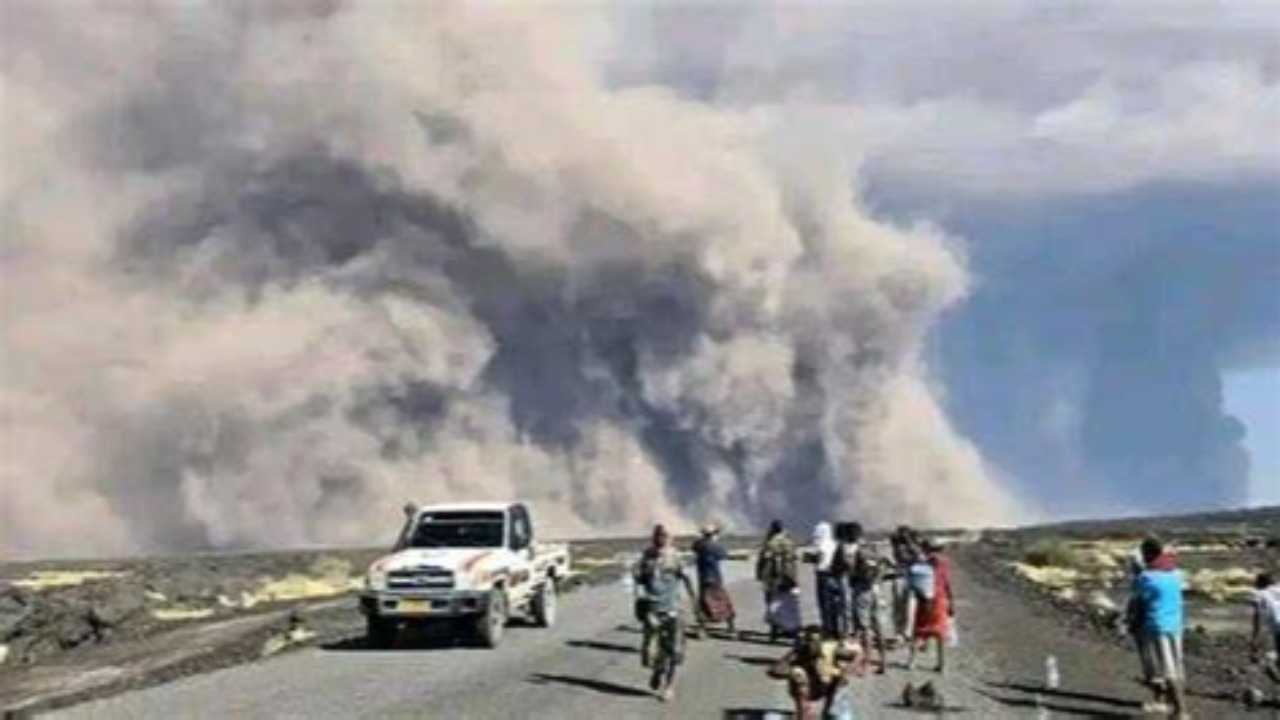
A volcano in northeastern Ethiopia erupted on Sunday for the first time in nearly 12,000 years, sending massive plumes of ash high into the atmosphere and casting uncertainty over the remote Afar region. The Hayli Gubbi volcano, located around 800 kilometres northeast of Addis Ababa near the Eritrean border, produced a powerful eruption that lasted for several hours, according to the Toulouse Volcanic Ash Advisory Centre (VAAC).
The VAAC reported that the volcano shot ash clouds up to 14 kilometres (nine miles) into the sky, an unusually high plume that quickly spread beyond Ethiopia’s borders. Satellite observations showed ash drifting across the Red Sea and the Arabian Peninsula, affecting parts of Yemen, Oman, India, and northern Pakistan. The eruption captured global attention as experts noted the extraordinary rarity of activity from a volcano long considered dormant.
The Smithsonian Institution’s Global Volcanism Program confirmed that Hayli Gubbi has no known eruptions during the Holocene epoch, which began roughly 12,000 years ago at the end of the last Ice Age. Volcanologist Simon Carn of Michigan Technological University also stated on Bluesky that the volcano “has no record of Holocene eruptions,” underscoring the seismic importance of Sunday’s event.
Situated within the East African Rift Valley, Hayli Gubbi lies in one of the world’s most geologically active zones, where tectonic forces continuously reshape the landscape. The volcano itself rises about 500 metres in altitude, forming part of a chain of volcanic structures that mark the boundary between shifting tectonic plates.
Videos circulating on social media — though not immediately verified by AFP — showed a towering column of white smoke billowing above the arid terrain, visible from miles away. The scale of the plume prompted regional monitoring agencies to issue advisories for aviation, with ash clouds having the potential to disrupt flight routes across East Africa and the Arabian Peninsula.
Authorities in Ethiopia’s Afar region have not yet provided information on casualties, displacement, or damage, and communication from the sparsely populated area remains limited. As scientists continue to analyze the eruption, the event is expected to spark renewed scrutiny of volcanic activity within the Rift Valley, a region known for dramatic geological shifts but rarely for eruptions of this magnitude.