'Extremely exciting': the ice cores that could help save glaciers
Dressed in a bright orange puffer jacket, Japanese scientist Yoshinori Iizuka stepped into a storage freezer to examine an ice core that could reveal vital clues for protecting the world’s glaciers. This fist-sized sample, drilled from a mountaintop in Tajikistan, is part of an international effort to understand why some glaciers there have resisted the rapid melting seen elsewhere.
“If we can uncover the mechanism behind the ice growth here, we might apply it to glaciers worldwide,” said Iizuka, a professor at Hokkaido University. “That may sound ambitious, but we hope it will ultimately help people.”
Glaciers are disappearing at alarming rates, with thousands expected to vanish each year unless global warming is curtailed, a study in Nature Climate Change warned. Yet the Pamir Mountains, where the Kon-Chukurbashi ice cap lies at 5,810 meters, have seen glaciers slightly grow, a phenomenon called the “Pamir-Karakoram anomaly.”
Iizuka’s team drilled two ice columns, one stored in Antarctica’s Ice Memory Foundation vault and the other transported to Hokkaido University. Researchers aim to uncover why precipitation has increased over the past century and how the glacier has resisted melting. Some suggest the anomaly may relate to the cold climate or additional water vapor from agriculture in Pakistan.
“Information from the past is crucial,” Iizuka said. “Studying historical snow accumulation can show why the ice has grown and what may happen in the future.”
Since November, the team has logged ice density, snow grain alignment, and layer structure in freezing labs. Ice layers reveal climate history: clear ice indicates melting and refreezing periods, low-density layers reflect packed snow, and cracks suggest snowfall on partially melted ice. Volcanic materials mark time, while water isotopes indicate temperatures.
The researchers hope the cores contain ice over 10,000 years old, despite a warm period 6,000 years ago. Ancient ice could reveal what particles filled the atmosphere and how the climate has shifted over millennia.
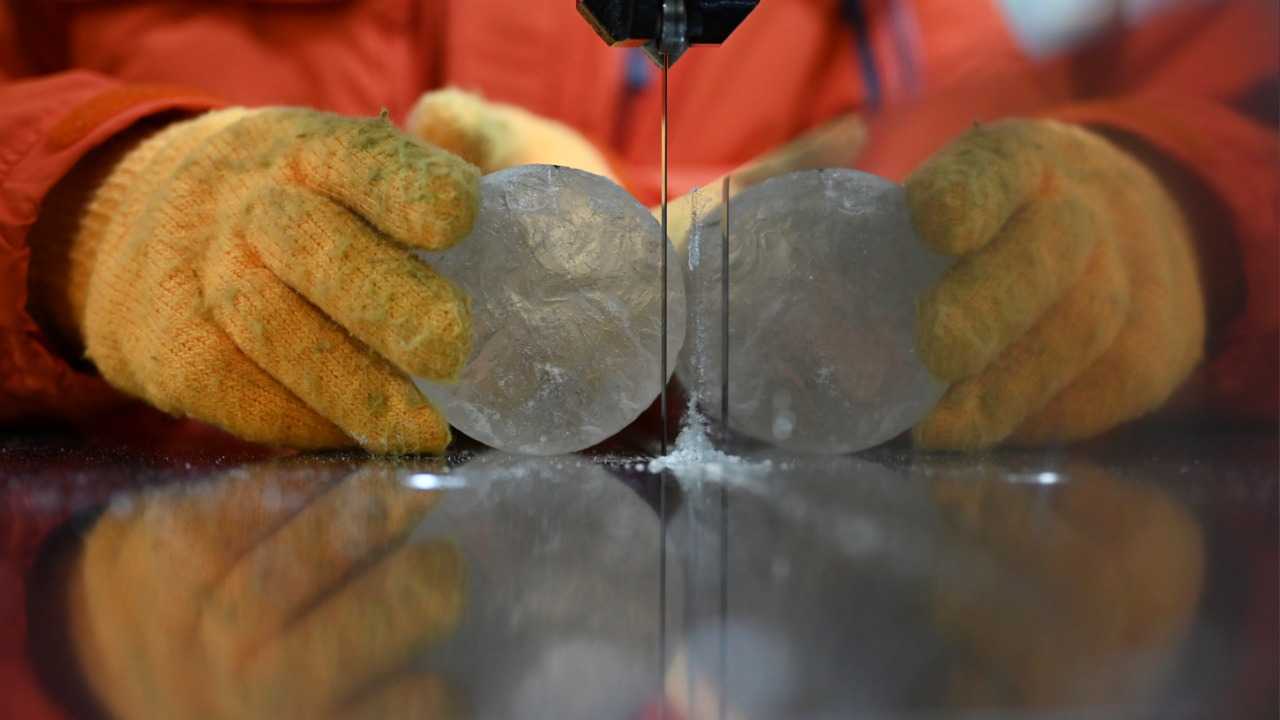
Graduate student Sora Yaginuma meticulously slices each core, performing multiple chemical and physical analyses. The team plans to publish initial findings next year and continue studying preserved cores in Antarctica, exploring even human impacts like historical mining.
“With so many secrets to uncover, this research is incredibly exciting,” Iizuka said. “It teaches us how the Earth’s environment has responded to both natural forces and human activity.”