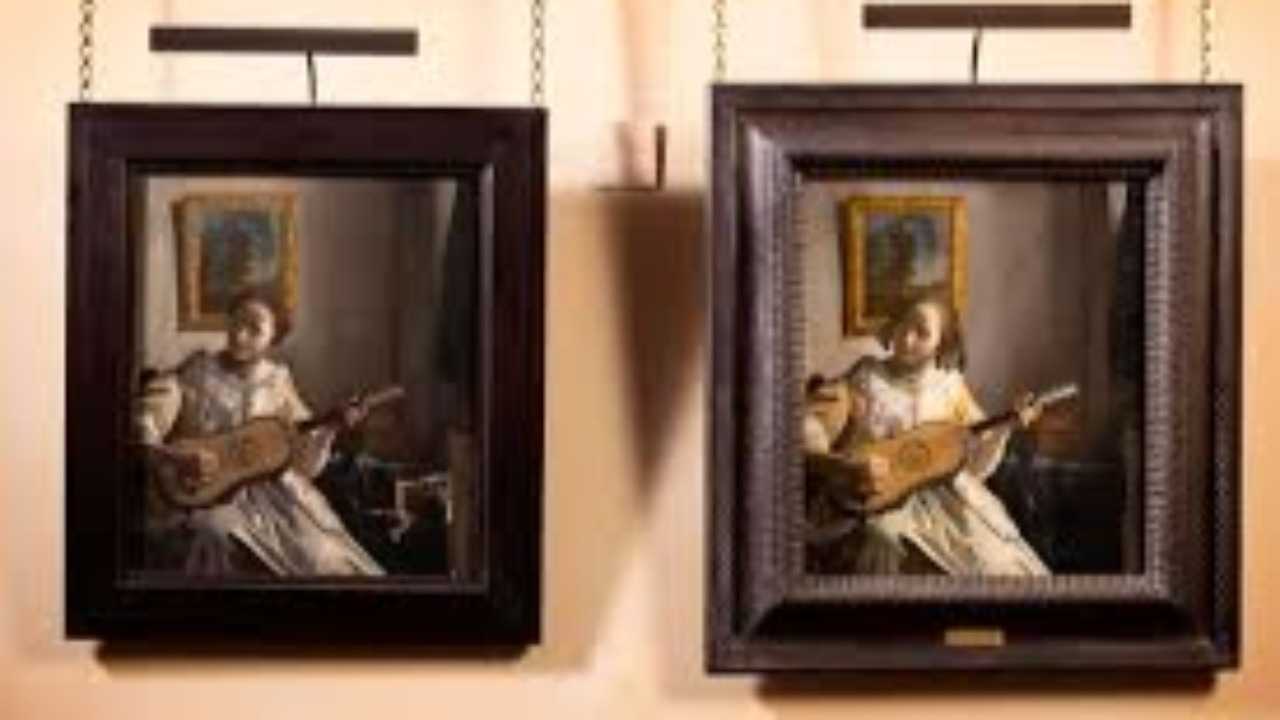
'The Guitar Player' vs. 'Lady with a Guitar': Exploring Vermeer’s masterpieces side by side
One of Johannes Vermeer’s most renowned paintings, The Guitar Player (1672), is currently on display at Kenwood House in north London, alongside its “twin,” Lady with a Guitar, which is on loan from the Philadelphia Museum of Art. The exhibition, titled Double Vision: Vermeer, runs from September 1 to January 11, 2026.
The Guitar Player is one of only 37 known works by Vermeer and is celebrated for its exquisite depiction of a moment in time, showcasing the artist's skill in capturing domestic life. This new display reignites discussions about the authenticity of the Philadelphia painting, as scholars have debated the relationship between the two works since the 1920s. English Heritage emphasizes that the exhibition invites visitors to contemplate this relationship without drawing definitive conclusions.
Originally, the Philadelphia version was considered the original until the Kenwood painting surfaced in 1927. The Kenwood version was quickly accepted as the prime work due to its better condition and Vermeer’s signature. Recent research, however, has shed light on key differences between the two paintings. Notably, the Kenwood painting features a sitter with ringlets, while the Philadelphia version has a different hairstyle. Additionally, the Kenwood painting is prepared with a pale grey-brown ground, contrasting with the dark brown ground of the Philadelphia piece.
Recent findings also indicate that the Kenwood painting uses ultramarine, an expensive pigment, while the Philadelphia work employs indigo, a cheaper alternative. This has led some experts, including Gregor Weber, a Vermeer specialist, to suggest that the Philadelphia painting may be an early copy of the Kenwood original.
Jennifer Thompson, curator of European painting and sculpture at the Philadelphia Museum, highlights that Double Vision offers a thrilling opportunity to compare the two works side by side. Visitors will be encouraged to consider how scientific analysis and connoisseurship contribute to our understanding of Vermeer and the materials and techniques used in 17th-century painting.
As the exhibition unfolds, it not only showcases the artistry of Vermeer but also engages audiences in the ongoing debate about authenticity and the historical significance of these two masterpieces.